


In a recent podcast interview, near the end of the episode, Teaism Explorer (the first Thai national to become a Certified Nihoncha Instructor) said something offhand that echoed in my brain for weeks. He had just read that a former Iemoto (hereditary grand master) of the Omotesenke tea school, once wrote that the best matcha comes from old trees in a book published in 1955.

It stuck because I had heard that idea many times before, just never about Japanese tea. In puerh, and in Chinese tea more broadly, reverence for old trees is ubiquitous: “gushu” or ancient tree are generally the most revered and are frequently used to make price and quality distinctions in tea. But in matcha? I had never once heard a Japanese producer talk that way or the sentiment echoed when I was studying Omotesenke over 10 years ago. So the thought lived rent-free in the back of my head for weeks until life got busy and it had been filed in long term memory.
Then it surfaced again, from a completely different source. I was deep in research for a separate piece on the tangled identity of Uji matcha, Uji-no-Matcha, when I came across the work of David Howell, the Harvard historian of Tokugawa Japan, on the Edo night-soil economy. Human waste was a graded commodity then, and the waste of the wealthiest households fetched the highest prices, on the logic that a richer diet made for richer fertilizer. And by Howell’s account, Uji’s matcha growers liked to buy exactly that top-grade night soil and feed it to their best and oldest plants.[1]
There it was again. Oldest plants. Now it was a pattern, and the burning question was why nobody around matcha today ever talks about it.
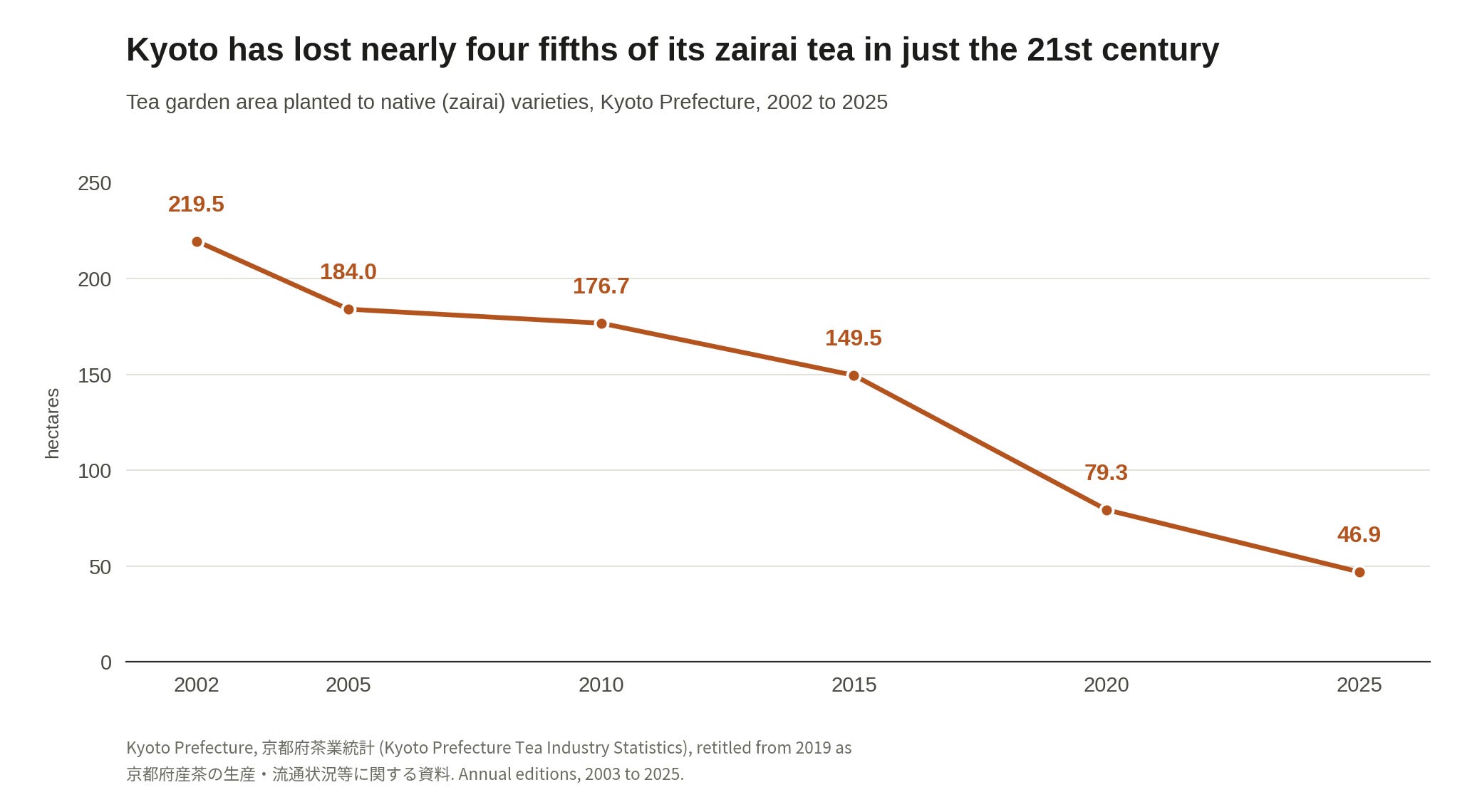
Today the spirit feels precisely the reverse! Tsuji-san, one of the most decorated tencha producers in Japan, replants every bush in his fields on a twenty-ish year cycle. His strict replanting is a touch atypical in its frequency, but the attitude is the norm: you do not really hear reverence for tea tree age in tencha production, and few farmers keep plants more than a few decades old for matcha. Among the Uji growers we have talked to, when tree age comes up at all it runs the other way, that a bush in the younger stretch of its life, somewhere around five to ten years old, gives the highest quality tencha. Japan’s own agriculture ministry agrees, putting a tea tree’s useful life at about thirty years, after which yield and the amino acids that carry umami fall away and the advice is to pull it out. Roughly forty percent of the country’s gardens are now flagged as over-aged on those grounds.[2]
None of this is a knock on the producers. Tsuji-san makes some of the most awarded tencha in Japan. But a larger story gets told around them, by tourism boards, by the matcha tins, by the new wave of direct-from-the-farmer brands: that Uji is where an ancient, authentic practice has been carried down unbroken.
That story is mostly a fiction.
The matcha being produced today looks almost nothing like the matcha of a hundred years ago, never mind a hundred and fifty. Everything used to be hand picked, hand processed, hand sorted, honzu rice straw shaded, milled on a hand-turned ishi usu stone mill fresh right before consumption, and all the plants were from Uji-native seed propagated zairai. The product you bought as a consumer wasn’t even matcha, it was tencha and you ground it yourself. Nothing about that process is remotely the same today, even for the most old-school producers, at best maybe half that list is being practiced by farmers you can count on a hand or two in Uji.
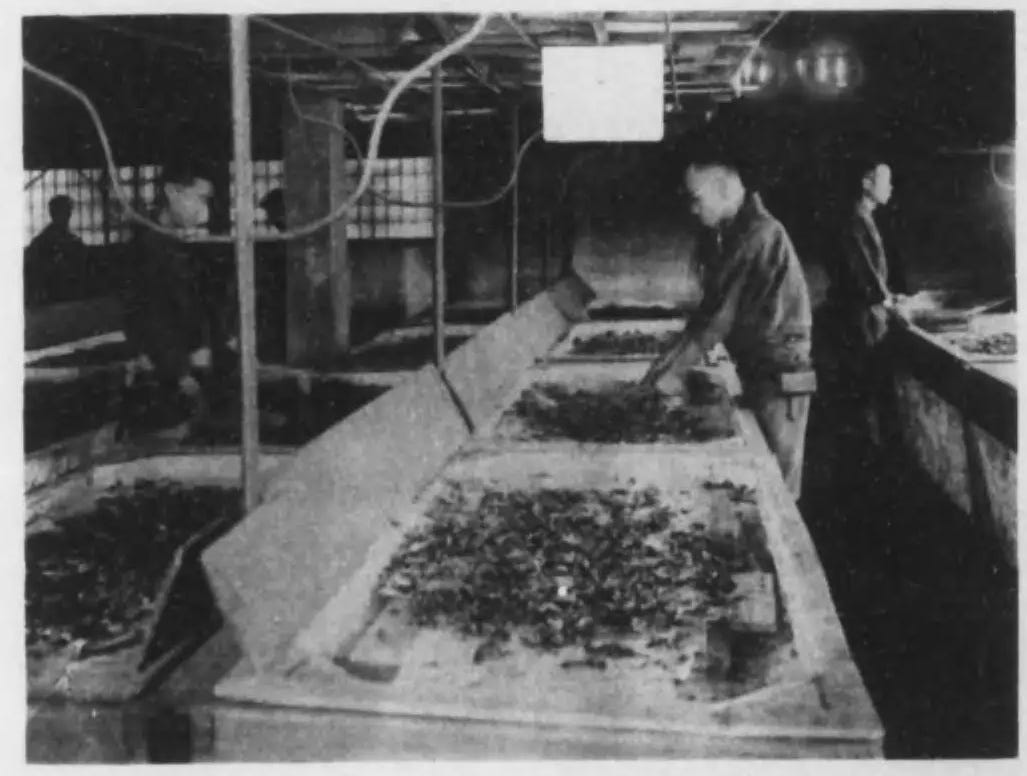
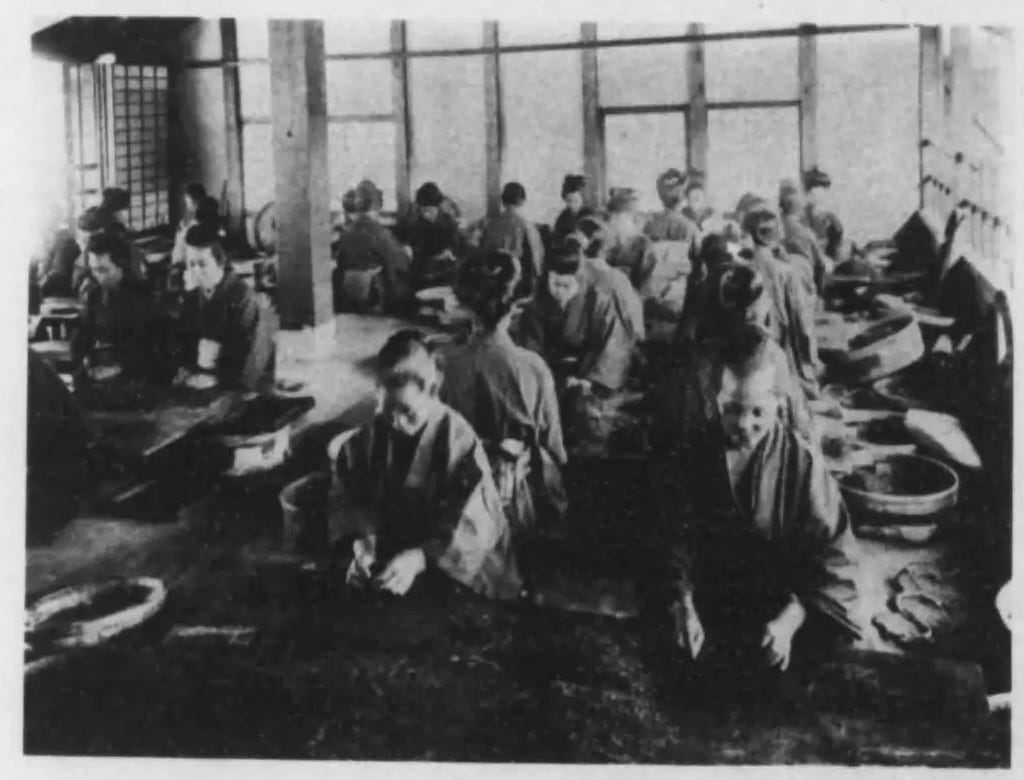
Nowadays very little tea is hand picked, kanreisha, or synthetic shading cloths are the norm, only a handful of cultivars are being used, everything is milled on an electrically turned ishi usu or a ball mill, and pretty much every leaf of tencha hits a conveyor belt at some point. Something genuinely old did live here. Then it stopped, within living memory, and almost nobody selling the romance and mythology talks about it.
So somewhere between those old records and Tsuji-san’s field, the consensus on an old tea tree flipped completely. So did we learn something new, and discover that young trees really are better? Or did we change the definition of quality?
A garden of individuals
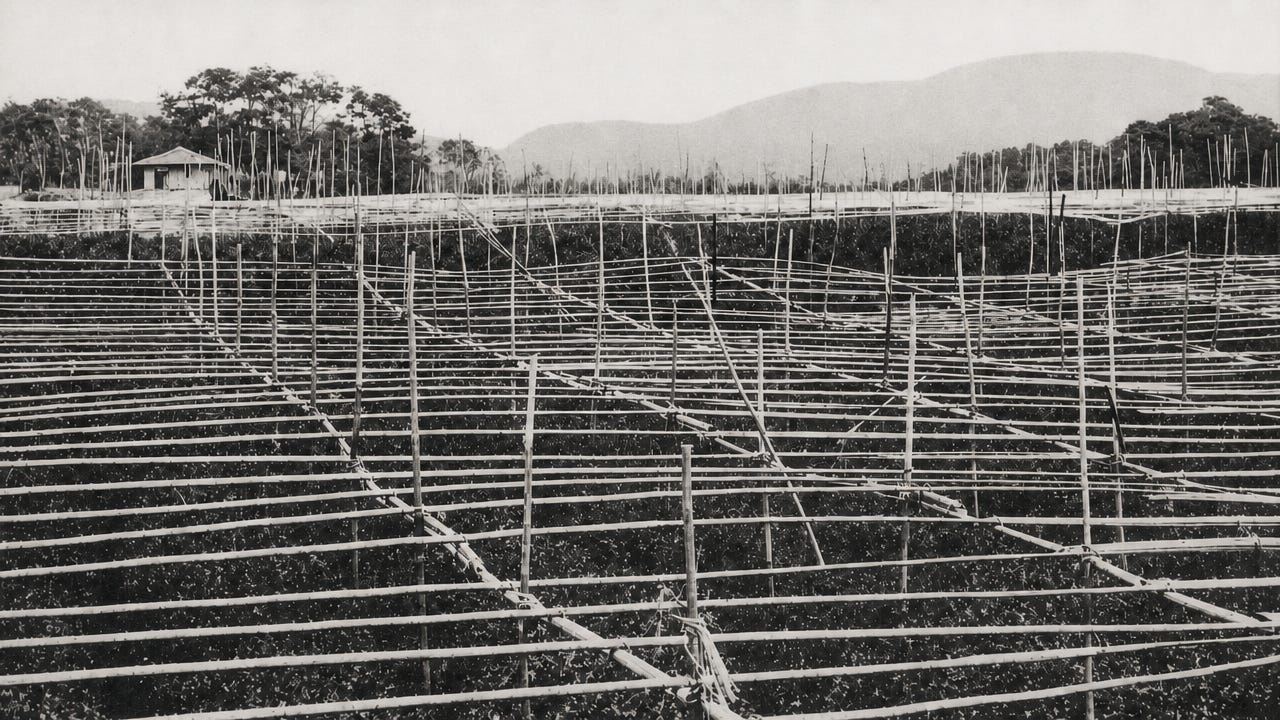
Every one of those old trees was grown from seed.[3] A seedling is a genetic one-off, the way two siblings are. So an old Uji garden was not one plant repeated ten thousand times. It was ten thousand individuals, each with its own leaf color at flush, its own size and shape and serration, its own degree of curl (the trait Ujihikari is known for), its own vigor and rooting, and, most consequentially, its own flush date.
A seed-grown garden is a variable: tens of thousands of distinct plants, none of them quite under your control, that you have to read and manage as they are. A cultivar is the opposite, a single genotype copied a million times. The one thing every modern grower is trained to want, a controlled variable. The entire shift from zairai to cultivars is the transition from a variable you manage to a control you set. It sounds like a technicality, but it is one of the most consequential things that ever happened to Japanese tea. Everything downstream changes.
Lets look at labor first. You cannot run a single row harvester over a field that buds on a hundred schedules, so a variable garden has to be read, selectively, over days. They’re either hand-picked or picked with much smaller hand-held machine pickers. A controlled variable flushes at one height on one day, and a machine can easily harvest it.
Then valuation. If your leaf is the unrepeatable output of one mixed garden in one season, there is no varietal spec and no standard unit, nothing a distant buyer can price from a name. You cannot commoditize a variable easily, you can only appraise the finished tea by eye and palate, which is why Japan built a ranked profession around exactly that, the chashi, graded first to tenth dan, with only about two dozen people ever certified at the top rank nationwide.[4] A cultivar is a commodity waiting to happen. Consensus gets developed around price ranges for “yabukita rates”, or “samidori rates”, or “ujihikari rates”.
Then blending. The chashi’s art of gōgumi was the craft of taming variability into a product that tasted consistent year after year.[4] Blending with cultivars is a categorically different act then blending with thousands of unique zairai plots: you combine a few known, stable, single-note components, closer to mixing paint than to coaxing order out of a living jumble. Consistency stopped being something composed out of chaos and became something assembled out of parts. Of course there is still intra-cultivar variance, but the job of a chashi must have gotten remarkably easier with a few “ground truth” cultivar labels between lots of Yabukita A and Yabukita B, rather than farmer A’s lots 1-15 and then times thousands of farms.
So the disappearance of Uji’s old trees is not one change. It is what happens when you convert a variable into a control: the labor changes, the batching and processing change, the trade changes, the blending changes, and the genetic diversity collapses.
When older was better
A 1922 handbook on judging Uji tea states that the finest gyokuro and tencha cannot come from trees younger than a hundred years old.[5]
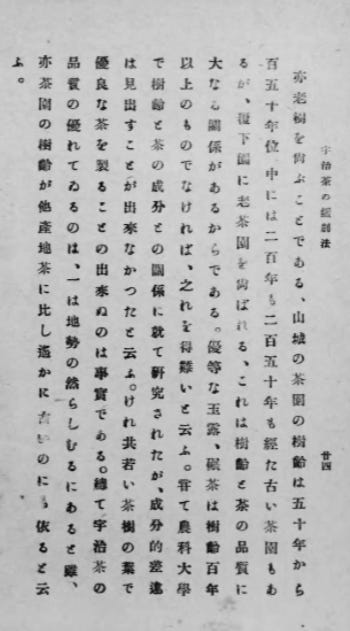
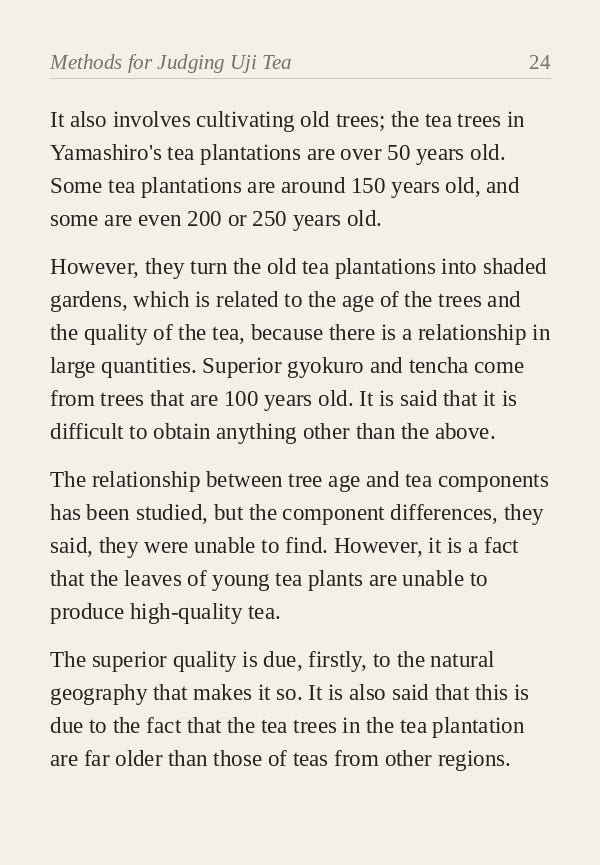
It was not a lone claim. A 1900 trade treatise puts it in four characters: old trees are taken to be the best.[6] A 1917 monograph sets a floor, that no garden can make gyokuro until its trees pass twenty years from seed.[7] A 1924 survey by the Kyoto industry’s own federation describes gyokuro gardens as places that prize old trees and feed them hardest.[8] A 1954 geography found thirteen percent of all Kyoto garden area over a century old, and sixty-three percent of the old Ogura gardens (the home of Marukyu Koyamaen) past eighty.[9] The old garden was not a relic. It was the norm.
In China this belief is almost everywhere, especially in puerh, where the most prized leaf is sold as gushu (古树, “ancient tree”) and the reverence comes with a mechanism: an old tree drives deep roots to mineral strata and water that shallow plants cannot reach, and that depth is said to show up as complexity, thickness, potency over many infusions, and the felt energy called cha qi, where plantation tea on surface fertilizer thins out fast.
One caution before we romanticize it. “Uji” was never only a place; it was an elite and exclusive system for the entire history of shaded cultivation until the Meiji Restoration in the mid-1800s. Under the shogunate, Uji’s tea was a state monopoly run through a guild of licensed tea-masters who supplied the shogun and carried the sealed jars to Edo in a procession others had to yield the road to. Covering gardens, the technique that makes tencha, was forbidden outside Uji proper, not even allowed in Ujitawara, a tea town a stone’s throw away. [6] “Uji quality” was a granted privilege as much as a fact of place. That apparatus is gone, the families sold today as keepers of an unbroken tradition are heirs of a vanished monopoly. This monopoly on shaded cultivation inadvertently created one of the most unique genetic populations of trees of Camellia sinensis on earth, those that tolerate and produce high quality tea in the dark. More on that later.
Roots
That mechanism, deep roots and it is not just about age. It is about how the plant was started, which is exactly what Uji changed.
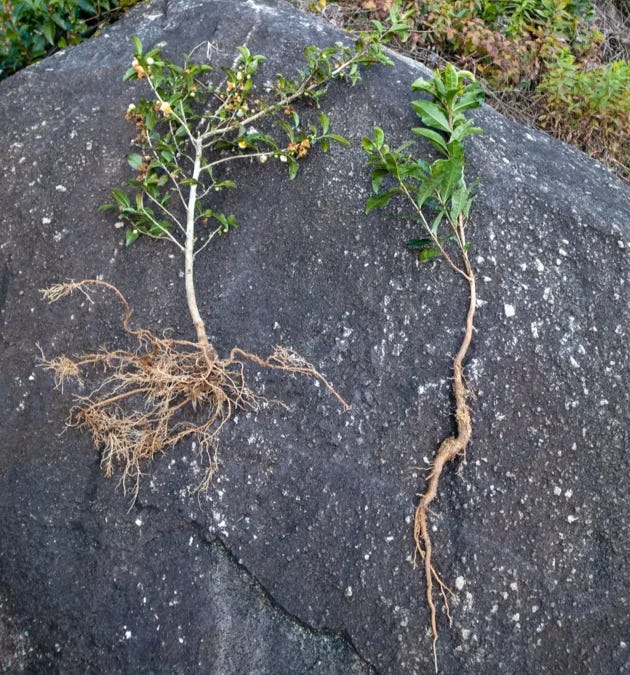
A tea plant grown from seed sends down a strong taproot with laterals, and carries real vigor and hardiness.[10] A plant planted from a cutting, which is how essentially every modern cultivar is propagated, never makes a taproot at all. It throws out shallow, fibrous adventitious roots, and cuttings are chosen for two reasons only, that they copy the mother plant exactly and suit machine management. No cultivar gets the taproot back. Rooting is a chronic weak point across the board, worse in some than others: Asahi, a prized covered-tea cultivar, roots so poorly and spreads so laterally that it is easy to surface-fertilize but fussy and frail to keep. Uji’s old trees were seed-grown. They had a taproot.
How they vanished
Nobody crossed that distance by arguing that young trees taste better, at least as far as we can tell. The old-tree belief was not refuted; it seems like it was bypassed, by a change about labor, machines, and markets. It certainly didn’t hurt either that most chanoyu practioners know nothing of the agricultural practices of the matcha they’re consuming. Matcha products have been historically positioned, categorized, and marketed in a top-down way where a consumer was told what is good, how it should be used, and who it was endorsed by. Hatsu Mukashi, from Blend house A, suitable for koicha, and endorsed by their Iemoto. Objective facts about what made a matcha good or bad was entirely behind the scenes.
The implications of switching from zairai to cultivars is huge. The high-growth economy drained the villages and drove wages up,[11] and hand-plucking an old garden became economically difficult. Machine picking was the answer, and a machine demands one thing a seed-grown garden cannot give and a field of clones gives perfectly: an even hedge of buds that all flush on the same day. The clone solved the labor problem the old genetics had created. It arrived with a compelling pitch: Yabukita, registered as a national cultivar in 1953, offered over ten percent more yield than seed stock, a first flush ten days earlier into the lucrative new-tea window, frost resistance, uniform growth, and easy replanting.[12] Plant early, mid, and late cultivars together and flush timing turned from a problem you suffered into a variable you scheduled.[13] From the late 1950s Yabukita swept the national competitions, and good tea began to mean tea that scores like Yabukita.[2] The state helped pay for the switch, with a cultivar registry in 1953, cutting propagation maturing through the 1960s, and replanting subsidies that drove the steepest conversion out of seed-grown gardens around 1975 to 1980.[14]
Once you propagate a single chosen plant, you can deliberately select for the traits you want: disease resistance, vigor, leaf color, picking time, and very importantly frost resistance. A late frost on a tender first flush can wipe out the most valuable picking of the year, so cold hardiness is one of the traits most prized in a new cultivar and advertised when one is released. Pau at Tea Nursery recently profiled the newer cultivar, Kirari 31, and frost resistance was one of its headline selling points, along with umami, yield, and suitability for shaded cultivation.
It’s easy to understand how and why the industry was forced to shift given the opportunities in the city and the so-called economic miracle of post-war Japan. Between the early 1950s and the 1990s, tens of millions of Japanese left the countryside for the cities, draining the farm villages, because by the bubble’s peak Japan was the world’s second-largest economy and the money, the work, and the future were all in the city. Almost none of it was on a tea hillside.

Cultivars created what seed propagated tea never could, a standard, gradable unit a distant buyer can price it by just knowing the name, which is what a commodity market runs on. It’s much easier to evaluate and even trade a cultivar like samidori or yabukita by the kilo. One lot of yabukita should bring similar things to the table as another in terms of flavor, color, yield, and any particularities of cultivation. How do you do that for a zairai plot where every batch of all the tencha in Japan is a unique mix? [4]
It is not an uncommon sentiment that Yabukita, bred in Shizuoka for sencha, does not make the best matcha, its leaf running too yellow under shade, so the Kyoto Prefecture Tea Research Institute in Uji bred and selected dedicated covered-tea cultivars, Samidori, Gokō, Ujihikari, Asahi, for deep color and heavy umami.[15][16] These were not invented from nothing. They were single plants selected out of the old seed-grown gardens of Uji families.[15] In one extremely over-simplified picture: a breeder walks a diverse old garden, picks its best individual, clones it into a uniform block, and the rest is uprooted and replanted as copies of the chosen one. The reality is that cultivar selection is typically at least a decade long process with an enormous amount of data collection required. Oscar Brekell, one of the most famous authors on Japanese tea, discussed the topic in greater detail about his time at one of the Shizuoka research centers on the Specialty Matcha Podcast.
The old trees were not beaten by a rival. They were mined for their best member and replaced by it, their own genetics the instrument of their erasure. Of course this is not unique to tea and was probably a necessary step for the long-term economic sustainability of the tea industry. The transition from an unpredictable variable to a “constant” has so many downstream implications on garden management, labor, mechanization, commoditization, blending, yield, fertilizer recipe application, and flavor.
Shade
Shade is the technique that makes tencha, and it is brutal on the plant. To make matcha you cover a garden for weeks, typically three or four under kanreisha, cutting it off from most of its light exactly when it most wants to grow. The plant in many ways is being sufficated, and not every plant can take it. Finding tea plants that will even thrive under that long a deprivation is its own problem.
What the shade does is biochemical. In sunlight, a tea leaf steadily converts the amino acid compounds, which tastes sweet and umami, into catechins, the polyphenols that taste bitter and astringent. Block the light and that conversion stalls: theanine concentrates, catechins stay low, and the leaf turns sweet, deep green, and savory rather than brisk and sharp.[17] That is the entire chemical basis of gyokuro and tencha. It is also why a tencha plant has to be a particular kind of plant, one whose chemistry already leans sweet and whose constitution can tolerate the dark.
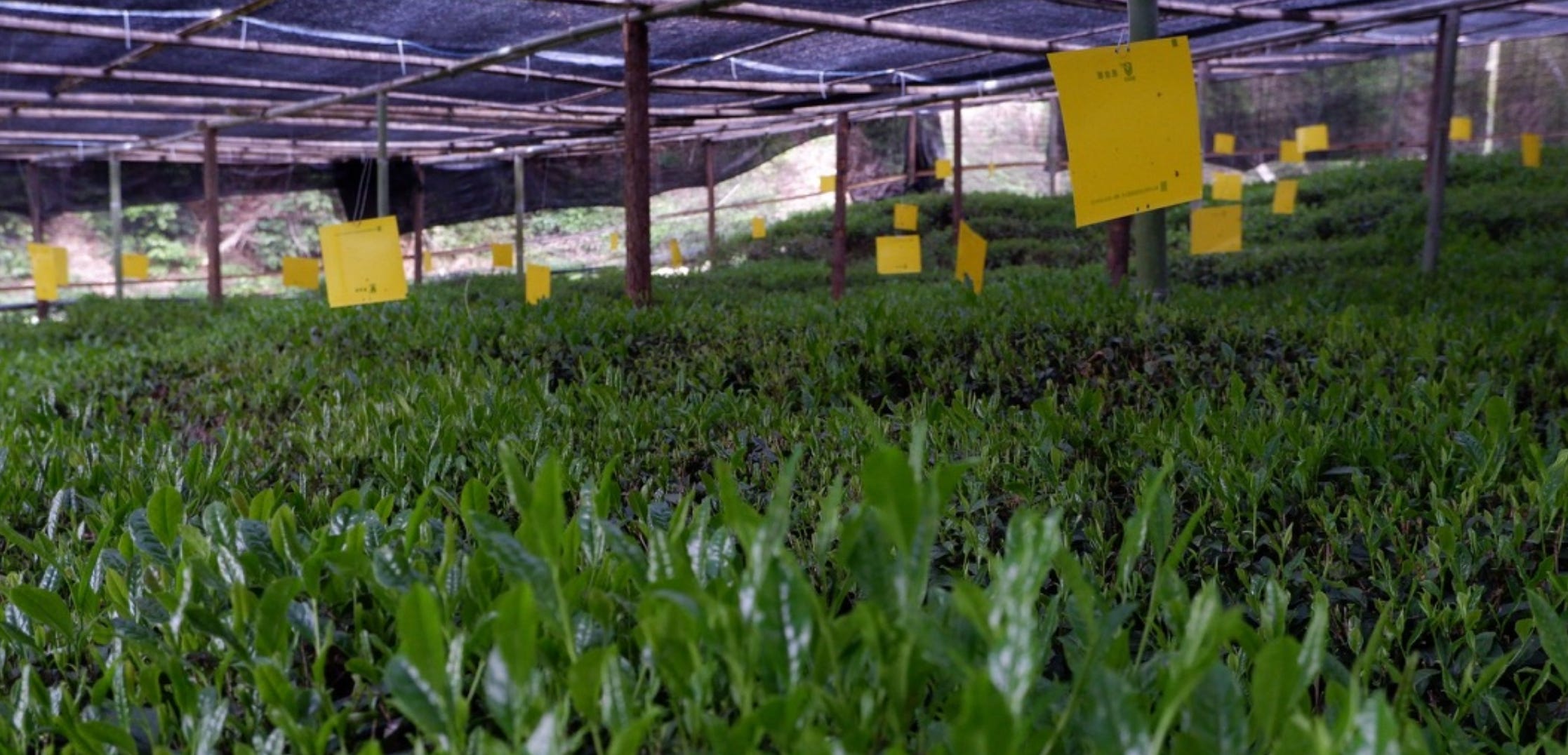
Shade does not work the same on every cultivar. Some are naturally so loaded with catechins that no amount of covering tames them. We once tasted a tea we commissioned grown in China under four weeks of eighty percent shade, made from a cultivar bred for black tea, and it came out still aggressively bitter and astringent, because the plant was simply built that way. Shade can suppress the conversion; it cannot empty a leaf that is born astringent. Not every tea is suited to this at all.
Which is the missing half of the Uji cultivar story. The reason Uji had to breed its own covered-tea cultivars, Samidori and the rest, is that most plants make poor tencha, and the most famous one makes it poorly and abundantly. Yabukita, the cultivar that blankets the country, is widely held among serious producers to give mediocre tencha, its leaf too yellow and thin under shade, yet it remains among the most common plants in shaded gardens anyway.[15]
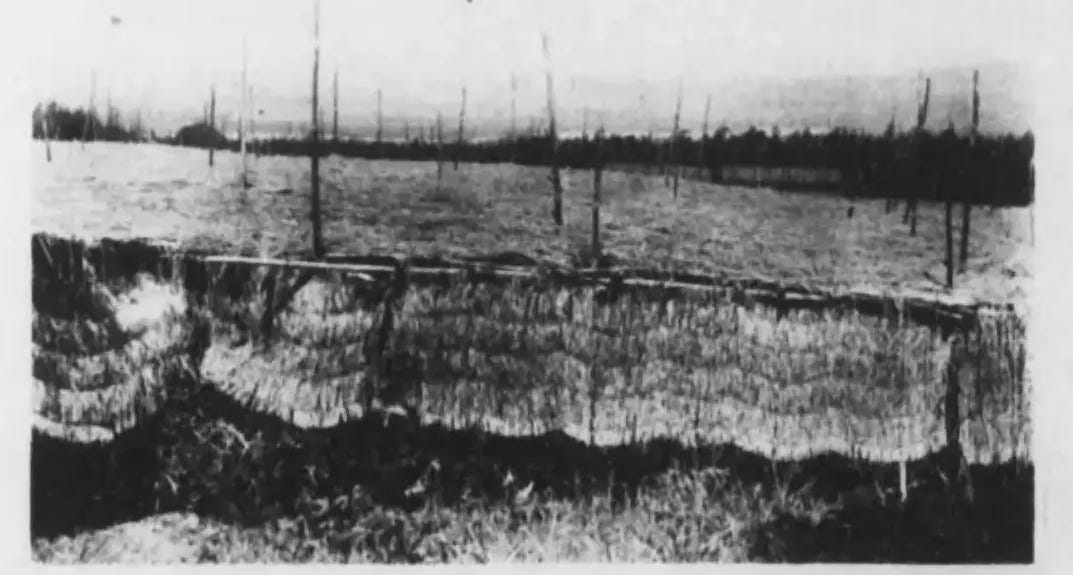
And this is what makes Uji’s old zairai singular, not merely old. Because covering was a legal Uji monopoly for centuries, Uji was very likely the only place on earth where tea was grown and selected from seed, generation after generation, specifically for the strange demands of deep shade. No one else was even permitted to try for that long. Every surviving old Uji garden was the output of that crucible: tens of thousands of individual plants quietly sorted in semi-Darwinian process over hundreds of years for the rare ability to thrive in the dark and turn sweet under it. That is not a genetic resource you can reconstruct on demand.
And it is more fragile than it looks. Even Asahi, one of the covered-tea cultivars selected out of that very Uji stock, does not take heat or direct sun well, and as the climate warms, some Asahi in Uji is now showing heat damage in the field. This is especially alarming because Asahi comes from Uji-native zairai and through natural selection and cultivation by Uji matcha farmers over centuries should be totally adapted to thrive in Uji’s climate.
We narrowed a population of tens of thousands of shade-tuned individuals down to a few dozen cultivars, plus whatever the research station happened to keep. Somewhere in the bushes we uprooted there may have been exactly the trait the next century needs, a heat tolerance, a disease resistance, a flavor nobody has tasted in eighty years, and we will never get to find out, because it is already gone.
Worked to death
There is lesser-discussed reason these plants rarely get old these days, and it points straight at the obsession with umami. To drive a leaf as sweet and savory as the modern scorecard and market rewards, you do not just shade it, you “feed” it extensively with fertilizer. Matcha is the foie gras of the tea world. Unfertilized matcha hardly tastes umami at all. The prized natural fertilizers are nitrogen-dense organics, rapeseed oil cake and sugarcane byproduct among them, valued because they load the plant with the amino acids that read as umami, glutamate chief among them, which is basically MSG. As these organic fertilizers break down it releases gas in the soil, which can damage the roots.
Matcha’s most prized flavors using current Japanese definitions of quality are completely unnatural to the tea plant which would never encounter that much nitrogen in the wild. And most producers don’t exclusively use organic fertilizers, chemical fertilizers such as ammonium nitrate are also very common, especially for competition tea, which is typically applied just before harvest as it’s easily taken up by the plant. This is one reason why most of the “best” matcha in Japan cannot be exported to the US or EU. Most of these teas are extensively sprayed with pesticides to keep the pests from eating the delicious amino-acid rich umami leaves.
Now stack the three together. The roots are shallow and weak to begin with, the fertilizer is corroding them from below, and a month under cloth is starvation from above. A plant pushed like that, season after season, cannot last, and a couple of decades is about the most you can ask of it, which is precisely the thirty-year replant the ministry treats as the norm. It only gets more intense outside Uji proper, where some producers take a second, third, and sometimes a fourth harvest. In Wazuka, Ujitawara, and the many places taking a second or even third crop a year, the same plant is fed and shaded over and over across multiple seasons. Each shaded harvest is forcing the plant to run an ultra-marathon.
In most of the tea-growing world no one discusses the lifespan of a tea tree at all. Left on its own taproot and worked sustainably, a tea plant is closer to an appreciating asset, the old gushu trees worth more with every passing decade, and it is genuinely rare for one to simply die. What’s interesting is how fast this shift happened. Within living memory, an entire industry has drastically shifted their agricultural practices and redefined quality in the process.
Tea used to be bitter on purpose
Tea did not enter Japan as a pleasure. It came as medicine and a meditation aid. The monk Eisai brought the seeds from China in 1191 and wrote the country’s first tea book, Kissa Yōjōki, “Drinking Tea for Health,” and he was explicit about flavor: in the five-element scheme (which came from Traditional Chinese Medicine), the heart governs and craves the bitter taste, tea is the chief of bitter things, and the Japanese diet lacked exactly that flavor. Bitterness was not a defect to breed out. It was the point.[18]
The palate then spent eight centuries walking the other way, most extensively in the 20th century. Everything we just watched, the shading, the heavy fertilizer, the cultivars bred for sweetness and deep green, points one direction: maximize umami, minimize bitterness. This is, not by accident, the country that coined the name umami and gave the world MSG. Good tea came to mean sweet, round, umami-saturated tea, and bitterness fell from the whole point to a fault.
I have tasted the older direction. In towns beside Uji that still keep a little old zairai and still shade some of it, I drank a matcha from hundred-year-old seed-grown trees that was nothing like a modern good matcha: genuinely bitter, and extraordinarily fragrant, aromatic in a way the umami-bombs never are. By the current scorecard it was simply wrong. A tea like that cannot win a Japanese competition; judged on color and umami and the absence of bitterness, it would collect penalty after penalty. And that matters, because the industry now runs on two incentive loops that both shut it out: the low end needs a uniform commodity crop, the high end is built to win competitions, and the old trees fail both, not by making bad tea but by making the wrong tea for the rules. There was arguably no market for them at all until, lately, the specialty world began to prize the older ways.
In modern times bitterness is often discussed within the context of a second harvest matcha and only palatable as a latte mixed with milk and sweeteners. Old growth zairai matcha’s bitterness is something different entirely. With it often comes extraordinary complexity, minerality, depth, a long pronounced sweet aftertaste and an aromatic profile unmatched by “culinary grade” second harvest matcha from over-fertilized, exhausted plants forced to run a second ultra marathon before they have fully recovered from the first.
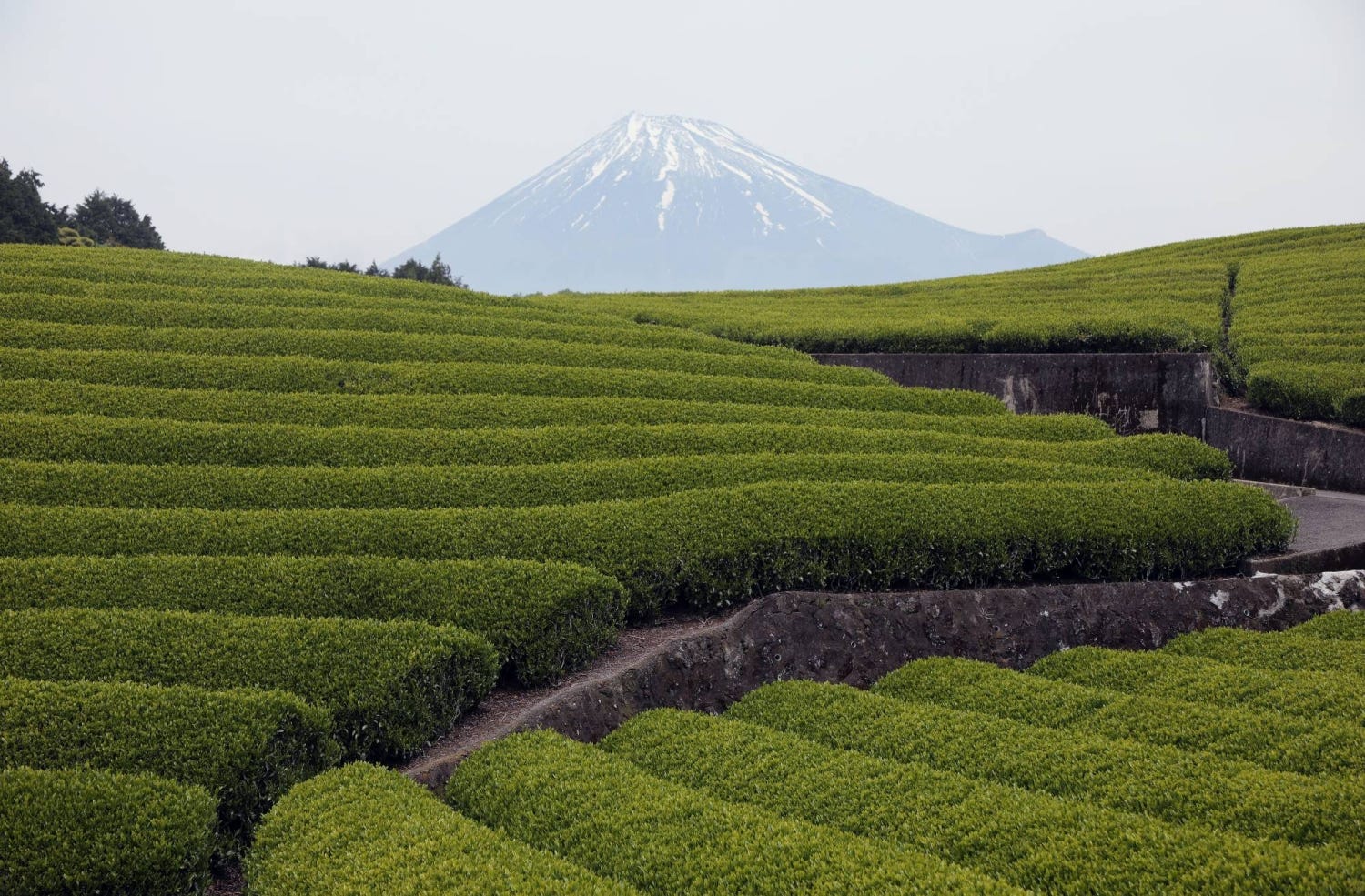
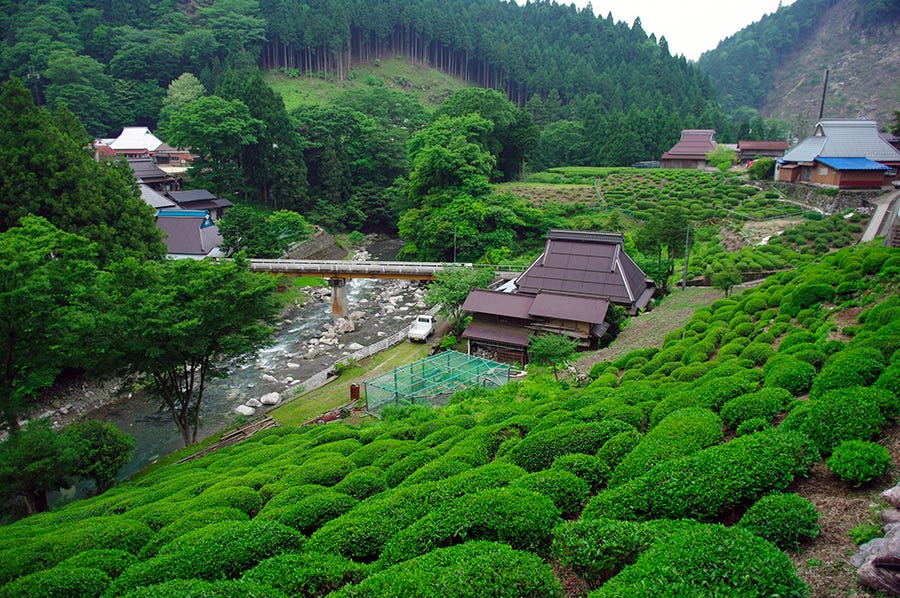
The obsession with umami is almost flavor vanity, but this vanity is even reflective in what most consumers would consider a “beautiful tea field”. A novice sees a hillside of dense, perfectly even rows as the picture of quality. The experienced eye wants the opposite, the scattered plot, the trees of different ages and shapes, and the genetic jumble that looks more like natural chaos than picture perfect garden management. What the beginner reads as messy, the expert reads as special.
Over the years the preferences of Japanese tea buyers changed, toward umami and away from bitterness, and with that change went an entire local population of Camellia sinensis var. sinensis in the most important place on earth for matcha and shaded tea.
Was it good or bad?
You cannot answer that plainly, so let’s take one lens at a time.
Homogeneity against heterogeneity. The seed-grown garden was a natural blend, an inherent complexity no army of monotone clones can create. But heterogeneity also meant an uneven, unpredictable cup that resisted standardizing and scaling, and for an industry that had to do both, homogeneity was the goal, not the failure, and it worked. The bitter joke is that the industry now sells single-cultivar “character” as a virtue, having bulldozed the deeper complexity mixed, seed propagated gardens.
Genetic diversity against predictability. Predictability is the whole prize: stable yield, known timing, a cup you can count on, a crop a bank will finance. But a country that put roughly three-quarters of its tea into one cultivar (yabukita),[2] and a Uji that leaned its covered tea on a few related clones, bought that predictability with fragility. A narrow gene pool is exposed to disease, to pests, to a shifting climate. The ministry’s own campaign to pair Yabukita with a second cultivar is a confession of the risk.[2] Diversity was resilience, and resilience is exactly what got spent for the sake of the control.
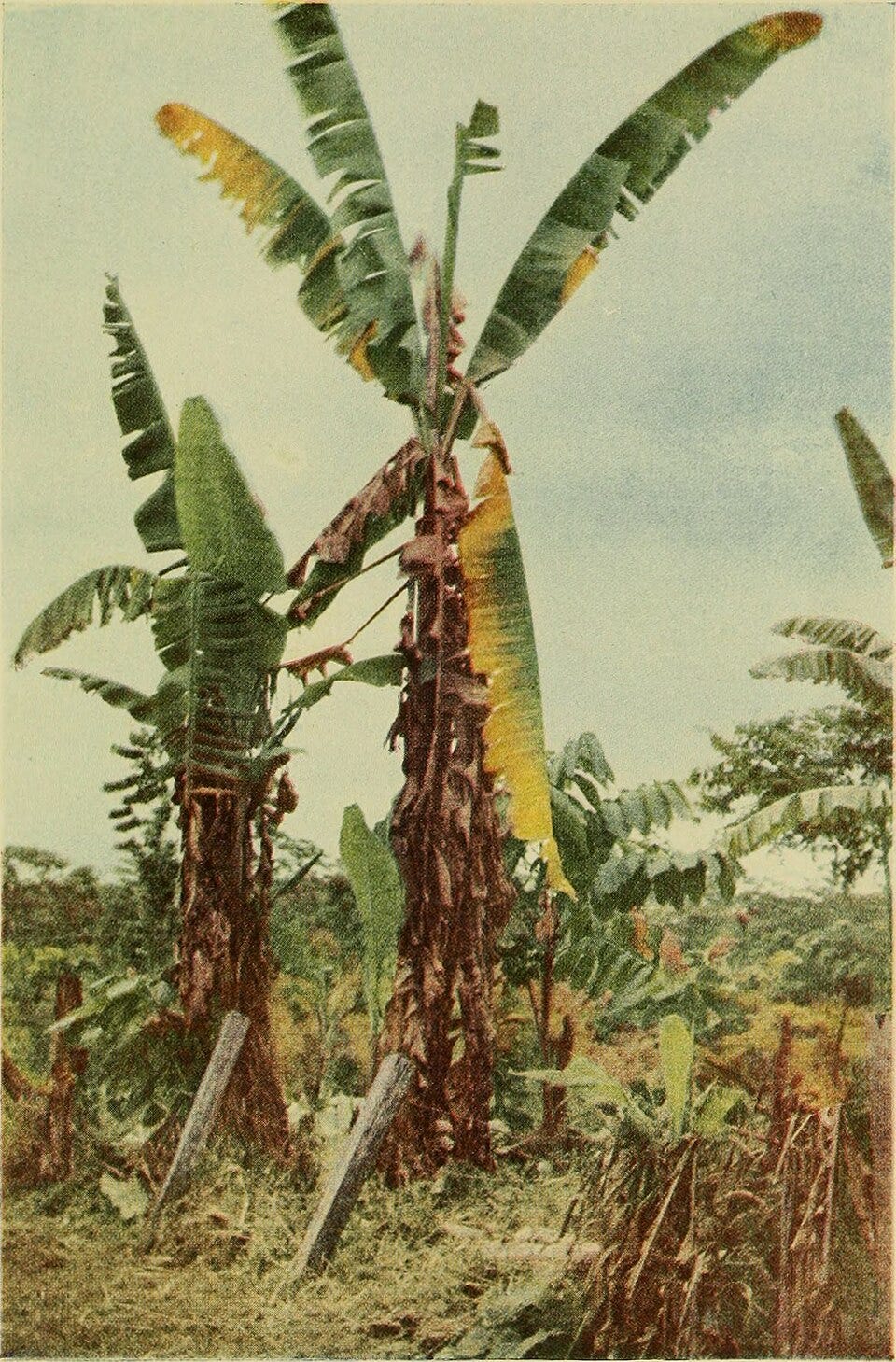
But the loss runs deeper than insurance against blight. Those seed-grown gardens were not merely diverse. They were a unique population built by an unrecorded experiment that ran for centuries. Farmers sowed seed, the weak plants died, the ones that thrived in that exact valley were kept and propagated and crossed again, generation after generation, a slow selection guided by thousands of hands and one local climate. That is a landrace, as singular and unrepeatable as heirloom grain or the ungrafted vines of an old vineyard, and it is fascinating in its own right, the genetic record of a place and a craft written into living plants. When a garden was bulldozed for clones, that population was not archived first. It is genuinely unclear how much of it survives anywhere. Losing it is not nostalgia. It is a real loss for the world, the same kind of loss as any extinction of cultivated diversity. We have watched this film before, in crops we take for granted. The supermarket banana is a single clone, the Cavendish, genetically uniform across six continents and one pathogen away from collapse, exactly as its predecessor the Gros Michel already collapsed.[19]
Cultivated Arabica coffee carries a genetic diversity of roughly one percent, against more than twenty for a crop like rice, which is why a single fungus, leaf rust, can menace the world’s crop.[20] A narrow gene pool is a clock counting down. Maybe some of Uji’s old genetics were captured at the breeding stations, the way the Kyoto institute drew its cultivars out of those very gardens, and I hope they were. But it is unclear how much was saved, almost certainly not all of it, much as it is uncertain even now how much of coffee’s wild diversity survives in collections.[20] What is lost from a living landrace does not come back. That erosion is, for practical purposes, permanent, and it is a loss not for Uji alone, or for Japan, but for everyone who might ever have drawn on it.
Rigid tradition or a living culture. The Uji families get sold, by the tourism boards, by the marketing, by a good part of the specialty trade, as the keepers of an ancient and unbroken culture. But the most authentic culture is not the one frozen most successfully. It is the one still alive, still changing, made of people with the agency to make the best decision they can for their land and their livelihood. A tradition kept under glass is not more authentic. It is just embalmed. So yes, losing those old trees and that diversity is a genuine shame. If there is a real cost beyond the genetics, it is a quiet, epistemic one: once an industry starts optimizing for what a lab and a competition can measure, color, amino acids, yield, uniformity, it slowly stops valuing what they cannot, and the whole integrated character of an old mixed garden. But on the other hand, could the old way have survived at all on a modern wage, in a modern market? And who am I, who does not farm, who has no legacy to uphold, to tell a grower in Uji that they owe me their bushes unchanged? Living cultures are built out of exactly these decisions, including the radical ones. Maybe the thing that needs to change is our idea of authenticity itself. It is not the preservation of an old culture in amber. There is no tencha left in Japan that is truly hand-made from hundred-year-old trees. That is not a betrayal. It is a living craft doing what living things do, which is adapt and carry on, and it deserves more respect than the romance does.
What happened to the old trees
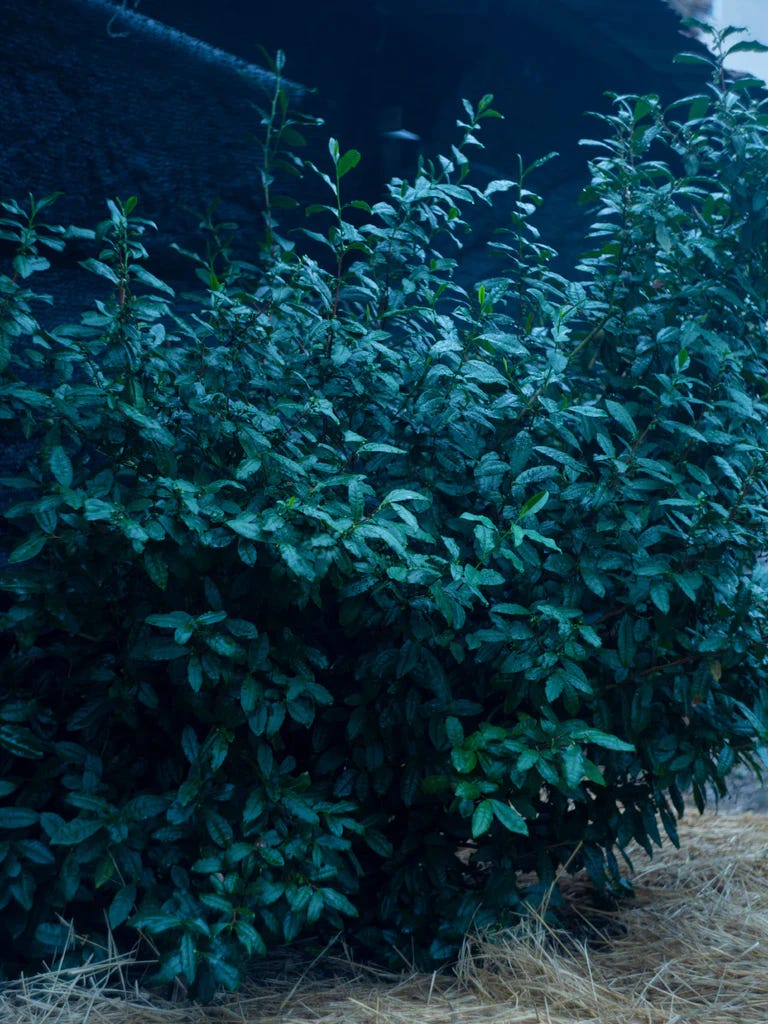
They were redefined into obsolescence. We chose to measure yield, uniformity, machine-fit, and a contest score, and a century-old seed-grown tree is poor at all of them and good at the one thing the new ruler could not read, a complex, irreproducible, deep-rooted cup. So we cloned the best plant out of each old garden, set it in tidy rows, pulled up the rest, and wrote down that a tree is finished at thirty.
Convert a variable into a control and everything downstream converts with it. Labor went from skilled hand to machine. Trade went from appraisal to commodity grade. Blending went from taming a living jumble to assembling stable parts. Diversity went from ten thousand individuals to a handful of clones. The old tree did not simply vanish; it took a whole world of practice with it.
And look how far tree age itself has fallen. It once named the best tea in Japan; now it names a tree due for the excavator.
Which is why it still matters. The one trait that world was built on, the heterogeneous, deep-rooted, irreproducible character of an old seed-grown garden, is the exact trait the specialty market now pays a premium for, in gushu puerh and increasingly everywhere. What made the old tree worthless under one metric makes it valuable under another.
A way forward
I should be honest about why I care. After tasting an enormous amount of matcha and tencha for work, the palate saturates, Yabukita, Samidori, Okumidori, one shaded umami after another, until it can feel like a single long wave of sweetness and sameness. That hundred-year zairai was the first matcha in a long while that felt genuinely new: bitter, wildly fragrant, more interesting than almost anything in the saturated middle of the market. The closest thing to a raw sheng puerh that I’ve ever had in a matcha, almost IPA-like. A breath of fresh air.
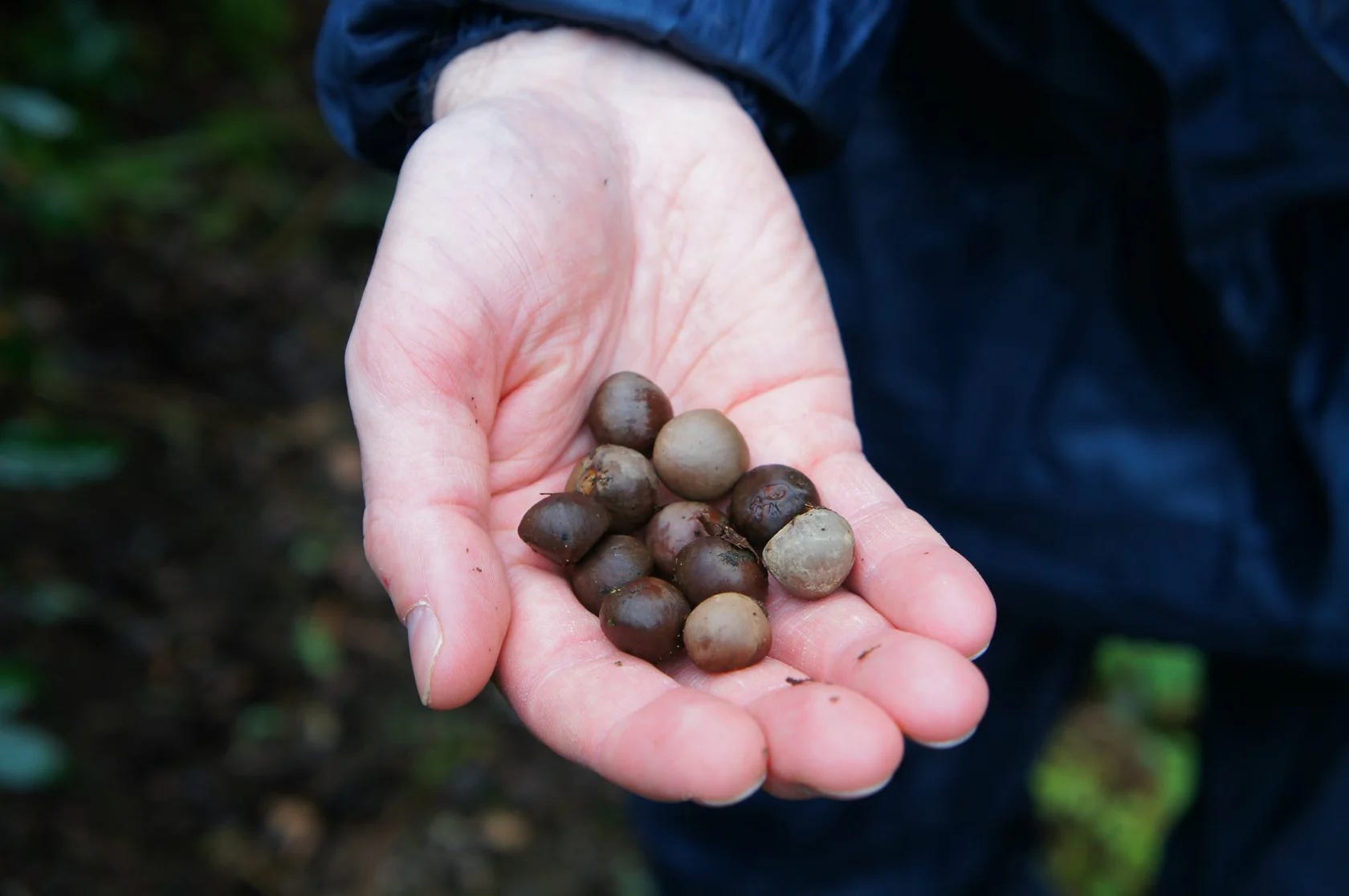
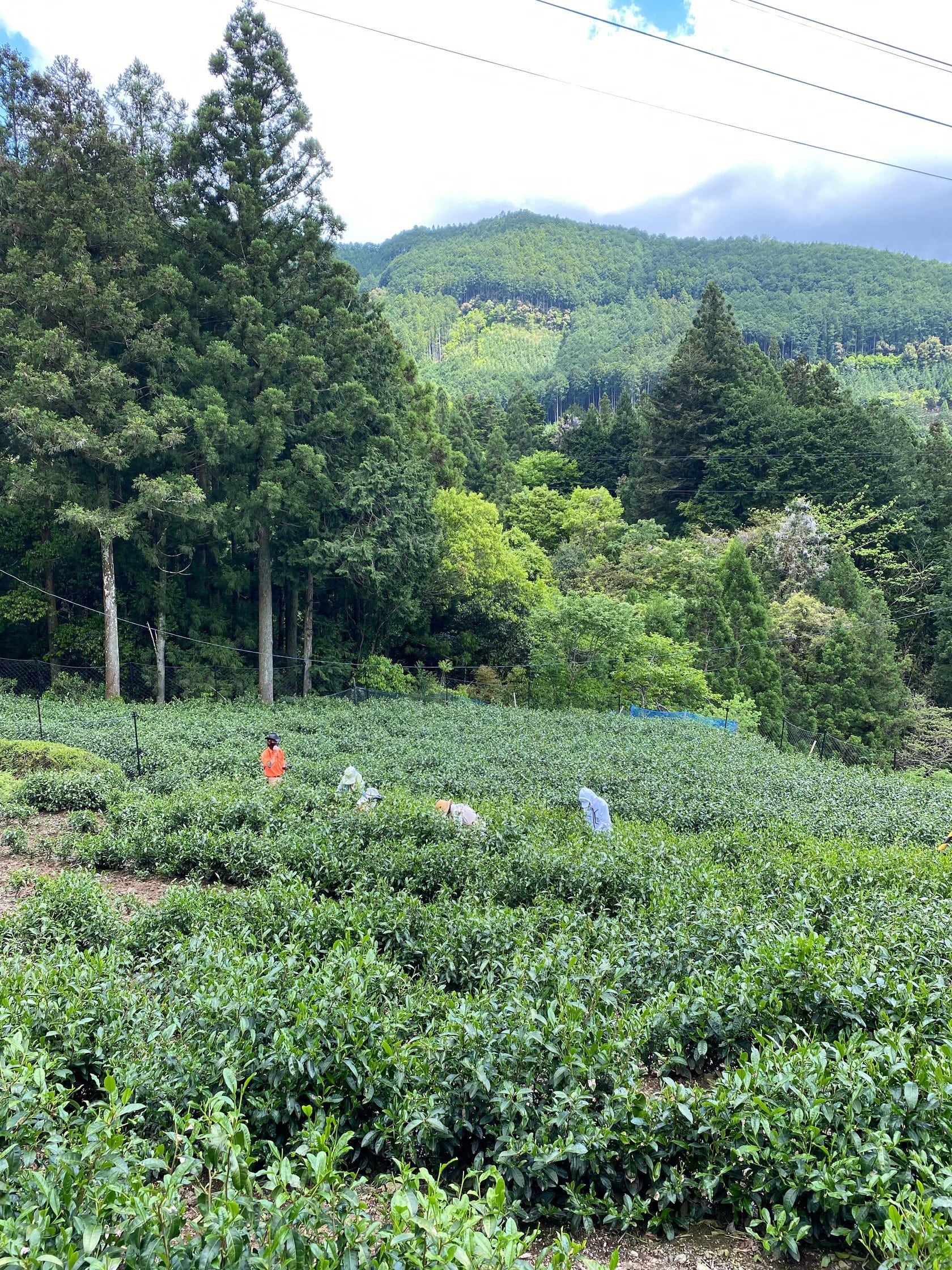
There is a way forward that is not a way backward. In 2019 a skilled Shizuoka farmer, Yoshiki Kosugi, and a group of enthusiasts revived seed-propagation on purpose, gathering seed from aroma-strong cultivars, the fragrant Koshun and the part-Assamica Kondōwase among them, and planting new gardens from it. The plants grow a real taproot again and carry some of their parents’ aroma, while the genetic shuffle of seed hands back the variability cuttings erase. Oscar Brekell’s Senchaism sells the result, a sencha with the wildness of a zairai and the refined aroma of its part-Indian parentage.[21] The offspring are not uniform, and that is the point: you trade the guarantee of a clone for depth, resilience, and surprise, a garden that is a population again instead of a copy. It’s unclear if anyone is doing this for matcha in Japan, but if they would I would be the first in line.
That is what happened to all of Uji’s old trees. They were not killed by better tea. They were retired by a narrower definition of good, in a century when everything around them changed and the scorecard changed with it. The work now is not to mourn them. It is to decide how much of what we threw away we actually want to grow back.
Sources
[1] David L. Howell, Harvard faculty page: https://history.fas.harvard.edu/people/david-howell ; “How Green Was My Night Soil”: https://u.osu.edu/osuchr/files/2017/08/Howell-How-Green-Was-My-Night-Soil-OSU-Oct-2012-2j81g65.pdf ; Wikipedia, “Night soil”: https://en.wikipedia.org/wiki/Night_soil
[2] MAFF (農林水産省), “新品種・新技術の開発・保護・普及の方針 茶.” https://www.maff.go.jp/j/kanbo/kihyo03/gityo/tuyomi/pdf/05-02tya.pdf
[3] Kusumoridō (楠森堂), “在来茶について.” https://kusumoridou.com/about_tea/
[4] note.com (Endō Sōkū): https://note.com/soku_gekku/n/nfd884935f3c2 ; e-cha, “合組”: https://www.e-cha.co.jp/contents/gougumi/ ; Nihoncha Seikatsu: https://nihonchaseikatsu.com/introduce/touchakai/
[5] Uji-cha no kanbetsuhō (宇治茶の鑑別法), Chagyōsha, 1922. NDL Digital Collection, pid 964773: https://dl.ndl.go.jp/pid/964773
[6] Chagyō Tsūkan (茶業通鑑), Murayama, 1900. NDL Digital Collection, pid 860659: https://dl.ndl.go.jp/pid/860659
[7] Uji-tea monograph, 1917 (Kuze-gun). NDL Digital Collection, pid 958169: https://dl.ndl.go.jp/pid/958169
[8] Kyōto Chagyō Shashin Sōran (京都茶業寫眞總覽), Kyoto Prefecture Tea Industry Federation, c. 1924. NDL Digital Collection, pid 1086927: https://dl.ndl.go.jp/pid/1086927
[9] Ukita Tsuneyoshi, geography of Uji tea, 1954.
[10] “Visualization of metabolite distribution ... of tea seedlings (Camellia sinensis),” NCBI PMC11469920: https://www.ncbi.nlm.nih.gov/pmc/articles/PMC11469920/
[11] Kotobank, “製茶業”: https://kotobank.jp/word/製茶業-86217
[12] Far East Tea Company: https://fareastteacompany.com/blogs/fareastteaclub/yabukita ; d:matcha: https://dmatcha.com/pages/cultivated-varieties-of-japanese-tea-yabukita ; Japanese Wikipedia “やぶきた”: https://ja.wikipedia.org/wiki/やぶきた
[13] Kyoto Prefecture Tea Industry Conference (宇治茶): https://ujicha.or.jp/knowledge/flow/hinshu/
[14] The Tea Crane: https://www.the-tea-crane.com/jpn/2020/02/10/tea-cultivars/
[15] Furukawa Seicha (古川製茶), “品種”: https://www.furukawaseicha.com/variety.html ; Furukatsu Seichajo: http://kyotofurukatsu.jp/碾茶の種類
[16] Japan Heritage (Nihon Isan): https://ochanokyoto.jp/nihon-isan/cultural-property/detail.php?sid=775 ; Kyoto Prefecture, “宇治品種について”: https://www.pref.kyoto.jp/chaken/mame_ujihinnshu.html ; institute interview: https://shop.chanoma.co.jp/special/detail/110
[17] NCBI PMC6186127: https://www.ncbi.nlm.nih.gov/pmc/articles/PMC6186127/
[18] Eisai (Myōan Eisai), Kissa Yōjōki (喫茶養生記, c. 1211 to 1214). Terebess (incl. Varley translation): https://terebess.hu/zen/mesterek/eisai.html ; “Drink tea and prolong life”: https://terebess.hu/zen/mesterek/yosai-tea.pdf
[19] Wikipedia, “Cavendish banana”: https://en.wikipedia.org/wiki/Cavendish_banana ; The Conversation: https://theconversation.com/with-the-familiar-cavendish-banana-in-danger-can-science-help-it-survive-64206
[20] C&EN: https://cen.acs.org/articles/96/i7/end-worlds-popular-coffee-nigh.html ; University at Buffalo: https://www.buffalo.edu/home/story-repository.host.html/content/shared/university/news/ub-reporter-articles/stories/2024/04/albert-arabica-genome.detail.html
[21] Senchaism, “The Trailblazer” product page: https://senchaism.myshopify.com/en/products/the-trailblazer-2023-手摘み実生茶-seed-propagated-50g ; Tuttle interview (Per Oscar Brekell): https://www.tuttlepublishing.com/blog/tea-time-tuttle-author-interview-per-oscar-brekell/
“A 1922 handbook on judging Uji tea states that the finest gyokuro and tencha cannot come from trees younger than a hundred years old.” This was wild to read, given how hard it is to find ANY tea produced in Japan today from trees even approaching 100! - I’ve been drinking the Yame 75 year old yabukita trees from Chiyonoen and even Sencha that old has been hard to find.
I will be standing there behind you second in line for any old tea tree matcha experiments amigos.
I realized that your article talks mostly about the plants & seeds, but one thing to also take into account -- the aging population of Uji's tea farmers.
It's backbreaking labor to maintain, shade, and harvest. There are more than a few plots of land in Wazuka that are no longer tended because the farmers are just too old to maintain them.
There are new people who are coming to these towns to try and revitalize, but there's still a shortage. (I was there in 2020 touring some of the tea farms, and was pointed to some of the overgrown plots that many farmers could no longer farm themselves because they were getting into their 70s-80s-90s.