


Uji, no Matcha
The best brands are dropping the generic term “Uji Matcha” at a rate as fast as they are dropping “ceremonial grade”. The ones who actually source from Uji increasingly drop the generic “Uji” name in favor of sub-region, cultivar, and farmer. Shirakawa. Gokasho. Uji City. These names tell smaller, truer stories. And as a 200-year-old Kyoto tea shop made clear in a 2013 notice to customers about concerns over origin and sourcing, even within the system, there’s a hierarchy of “Uji-ness” that acknowledges what everyone in the industry already understands: not all “Uji Matcha” trademark supply regions are created equal, and the label says very little about what’s in the tin. [1]
To be clear: this is not an argument against blending. The traditional Uji blend houses represent centuries of accumulated skill, and the art of blending tencha from multiple sources into a consistent, balanced product is a legitimate and deeply respected craft. When a tenth-generation blender in Kyoto combines leaves from Wazuka, Joyo, and towns in Mie into a blend that tastes the way their family’s customers expect, that is skill. And for most consumers, what they think of as “Uji Matcha” is, in fact, one of these blends.
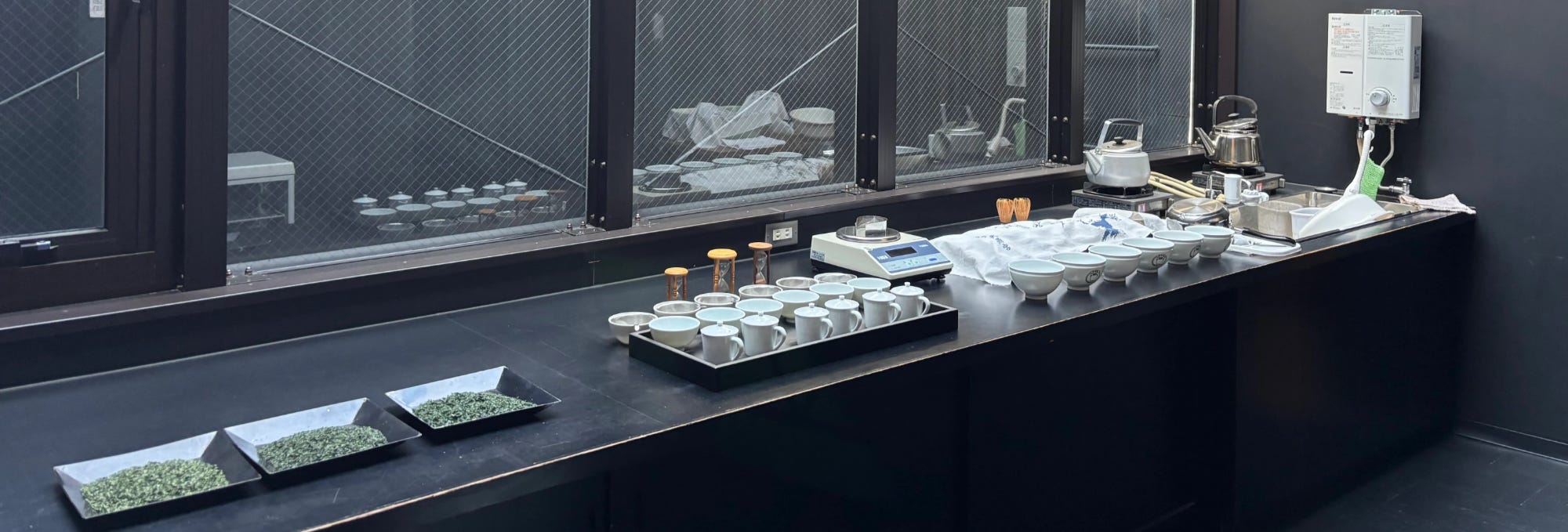
The problem is not blending. The problem is calling a blend a single-origin product, or labeling tea as coming from “Uji, Kyoto, Japan” in a way that implies single origin when it is not. It’s an erasure of transparency. Every time a tin carries that implication, a set of interesting human stories disappears. The farmer in Wazuka who makes their own organic fertilizer. The producers in Joyo who have been recently granted permission to grow the highly coveted and still-protected Narino cultivar. The farmer experimenting with seed-propagating from known cultivars, hoping the genetically diverse offspring has similar taste characteristics with the power of a taproot structure no cultivar can ever have. Their contributions vanish under a single geographic label and a claim of provenance that doesn’t hold up to scrutiny.
If you want to drink tea from a traditional blend house, that is a perfectly good choice. But know that what you’re drinking is an Uji-style matcha blend, not a single-origin product. The industry owes consumers that distinction.
There’s an irony buried in the history here. Wabi-cha, the austere style of tea ceremony that emphasizes simplicity and restraint over material display, traces a lineage from Murata Shuko through Sen no Rikyu. It’s the tradition Uji claims as its spiritual heritage. And it was built on a rejection of material fetishism. In the Nanboroku, Rikyu is recorded saying: “To be concerned about the quality of the dwelling in which you serve tea or the flavor of the food served with it is to emphasize the mundane. It is enough if the dwelling one uses does not leak water and the food served suffices to stave off hunger.” [2] Rikyu was talking about the physical trappings of the tea room, not about tea itself. But the principle underneath, that fixating on the material prestige of the vessel rather than the spirit of the practice misses the point, maps uncomfortably well onto a market that fetishizes a place name while ignoring the hands that actually shape the product.
Uji-no-Matcha. In Japanese, the title reads naturally: 宇治の抹茶, “the matcha of Uji.” But read it in English and a second meaning surfaces: Uji, no matcha. Almost no Uji matcha comes from Uji. One reading is a tribute to a centuries-old accumulation of processing knowledge and craft. The other is a lament that almost none of it comes from the place the label claims.
Both readings are true.
The matcha of Uji is real. But it’s not just a place. It’s a method. A lineage of processing knowledge. An accumulated understanding of shade and steam and stone. That heritage travels. It traveled when the Horii kiln left Uji. It traveled when Wazuka farmers retooled. It traveled when Kagoshima farmers went to Uji to learn directly from Uji matcha producers, then brought those techniques home. It’s traveling now as producers across Japan build new facilities with new ambitions.
And it’s traveling beyond Japan’s borders entirely. Kitagawa Hanbei, a sixth-generation Uji tea house founded in 1861, has established a subsidiary in Dawu County, Hubei Province, China, applying Uji cultivation and processing methods with the stated goal of building a matcha base “as famous as Japan.” [3] Aiya, the major Nishio producer, set up a subsidiary in Zhejiang in 2005. [4] The craft doesn’t care about borders. In a way all matcha grown outside of Uji is at least in part, spiritually “Uji Matcha” since Uji is the birthplace of shaded cultivation and was the only place in the world where it was practiced for hundreds of years.

In recent years, an explosion of non-Japanese-founded “single-origin” matcha companies have begun celebrating the human stories underneath the tea. Many of these founders wandered into Japan without context or connections, fell in love with the product, and started asking questions.
“Is this from Uji?” turns out to be a shockingly complex question, and it is almost always answered with “yes.” The unspoken communication is typically, yes, it was blended in Uji, or in a nearby Yamashiro town like Kyotanabe or Ujitawara. Or yes, it meets the trademark definition. Brand owners and suppliers frequently talk past each other when discussing origin. The all-too-painful question, “does this come from Uji-grown tencha?” almost never gets asked.
This isn’t just an Uji problem. With Nishio’s GI withdrawal, producers there are almost certainly blending in tencha from higher-volume areas and labeling it as Nishio matcha. And the problem isn’t limited to matcha: until recently, it was entirely legal to blend tea from a high-volume region with less consumer cachet, like Kagoshima, into Shizuoka sencha.
Sourcing with accurate provenance to sell a truly single-origin product is very difficult in Japan.
We’ve even seen major Nishio-based matcha producers setup new factories in Yamashiro counties in Kyoto prefecture stating “as long as we deal in Kyoto matcha, we should manufacture them for ourselves locally in Kyoto to deliver higher-quality and fresher Kyoto matcha to customers.” [source not disclosed, but quoted directly from their own marketing materials] “Fresher matcha” sounds admirable until you realize that Nishio is a two hour drive from Kyoto. This is how new “Uji matcha” is born. Not from Uji-based matcha farmers reviving abandoned tea plots, not from innovations increasing yield, nor the planting of new gardens. It’s the full utilization of the loophole so generously carved out by the “processed in Kyoto” Uji Matcha trademark definition.
So many players are literally manufacturing an origin under these rules. Even in Japan, most consumers believe that Uji matcha comes from Uji. Nothing will change unless consumers start demanding more transparency because everyone in the “Uji Matcha System” has every incentive to keep it going. It will probably take another scandal for MAFF, the Kyoto Tea Cooperative Association (the owners of the Uji matcha Trademark), and other regulatory bodies to wake up and build enough consensus to make a more meaningful and honest change in policy.
We’ve recently learned through a primary source, that even some of the most respected Uji-based blend houses who claim they are only sourcing from the four prefecture trademark zone of Kyoto, Nara, Shiga, and Mie have started reaching elsewhere for their sourcing. Even the most generous interpretation of “single origin” by recognizing the trademark zone is beginning to erode, and unless you go to the source and talk to the farmers who are selling their tea to these blend houses, you’d never know.
Many new matcha founders, without intending to, applied single-origin frameworks imported from specialty coffee and wine, and in doing so became part of the very problem this series describes: creating more demand for the name “Uji” rather than for the farmers, the processing choices, and the regions that actually determine what ends up in the cup.
But the best of them are learning and adapting. The weight of the name “Uji” flattens everything underneath it. A thousand human stories about craft, tradition, innovation, and place get compressed into two syllables on a label. Every time a consumer asks for “Uji” without knowing what they mean, a producer in another region loses a chance to tell their story. Every time a vendor stamps “Uji” on a tin without asking where the leaf actually came from, the feedback loop tightens.
Creating demand for new regions takes work. It’s frankly much easier to receive a price list from a Japanese supplier offering “Uji Matcha” and just not ask questions. To tell a more honest story requires effort and at the very least awareness. After talking with dozens of matcha brand founders over the past few years, I’m still shocked how little awareness there is about the true provenance of most Uji matcha they’re marketing and selling. Getting to the truth can require going against the grain, a practice that is enormously difficult in Japan, where the social cost of challenging an established narrative is high. The people doing the most interesting work in matcha today are paying that cost. They deserve to be heard.

One of the definitions of a commodity is that its components can be seamlessly swapped for one another. That is the status quo of Uji Matcha. But a samidori cultivar from a specific harvest, from a specific farmer, in a specific region? That is infungible. That is specialty. And specialty is the kind of market the matcha industry is going to need if it wants to survive.
Many people assume that a licensed “Japanese tea master” or a decade long tea ceremony practitioner are tea connoisseurs and directly support an industry of tea farmers not only upholding tradition but also innovating and moving the ball forward. That couldn’t be further than the truth. Talk to 99% of the people that study tea ceremony and they know less about the product than a matcha influencer on TikTok buying a can of Rocky’s Matcha single cultivar okumidori comparing it to the same cultivar from a different prefecture. Until very recently, most tea ceremony practitioners didn’t even know what a cultivar was.
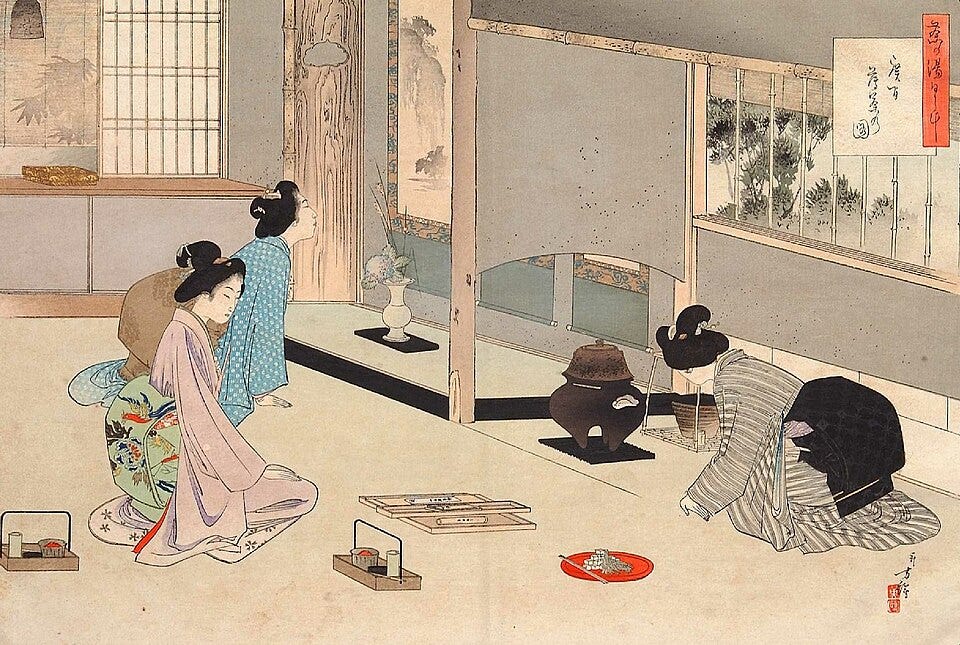
Traditional tea ceremony practitioners ironically go to great effort to understand the history, craftsmanship, and artistry of calligraphy, tea bowls, and their prized tea scoops. But when it comes to matcha, they typically stop at the poetic name, whether it suitable for usucha or koicha, and the endorsement of the iemoto of their school. They need to be told it is high quality by the brand or the iemoto. These are not people who have been educated or trained enough to be willing to pay more for a product with true provenance and a transparent label that recognizes the effort of the people who actually make the tea. Every poetically named product erases the hands that touched the leaf and simultaneously relieves the consumer of the burden of acquiring preferences and cultivating their own gustatory judgment on objective facts that determine matcha flavor profile outcomes. There is no celebration of cultivar, shading style, regional processing technique, fertilizer philosophy and all the factors that produce an incredible, largely unappreciated diversity of human stories and flavor profiles.
The tea ceremony practitioners who represented the overwhelming demand for matcha through the twentieth century are aging out. Japan’s birth rate hit a record low in 2024, dropping below 730,000 births for the first time. In recent years Japanese adult diaper sales have outgrown baby diaper sales. The future growth of Japanese tea, and matcha in general, is not in the domestic market. Young Japanese are not studying chanoyu en masse. The days of “good wives and wise mothers” is gone. Although abysmal by G7 standards, Japan has made progress on women’s rights, thus weakening the structural pipeline of new tea ceremony practitioners discussed in part 2.
In October 2024 Marukyu Koyamaen made an announcement that was the shot heard around the world. It shocked everyone and honestly came as a bit of a surprise, that for the first time in it’s 300 year history, they might sell out of matcha. The matcha boom created global demand like this industry has never seen, and nearly all of it is for “Uji matcha.” Everyone believes they are buying a single origin product. The reality is they are guzzling a trademark. It is a collective hallucination, and the industry has every incentive to keep it going. Seemingly out of nowhere an entirely new and global market caught this very traditional industry by surprise. And these consumers care about very different things. Ideas of knowing where your food came from, who grew it, and what makes it special are the cornerstones of contemporary global culture.
The matcha boom gave this industry a future. Transparency is the only thing that will let it keep one.

You pick up a tin. You whisk. You drink. The liquid is vibrant and thick and sweet in a way that has nothing to do with sugar.
The tin told you something before you opened it. Samidori cultivar, twenty-five days shaded, fertilized with oyster shells, fish meal, and rapeseed oil cake, stone-milled by a producer whose name you can look up, whose methods you can trace. Somewhere in that sweetness is an amino acid called l-theanine, built from the nitrogen in that fish meal, amplified by those weeks of darkness that kept the leaf from converting it into something bitter. Every decision is legible. Every hand is named.
The craft in your bowl has a lineage. It started in Uji four centuries ago, in a handful of families who guarded it with the force of the state. It has been traveling ever since.
You take another sip. It’s still beautiful. It might even be more beautiful now that you know what you’re actually tasting: not a place, not the false illusion of a place, but everything someone chose to do bringing that matcha to life.
A commodity is something you consume. A specialty product is something you choose.
Most people never learn the difference because they stopped reading at “Uji.”
Sources, Part 5
Horaido Tea Shop: Notice Regarding Origin Issues (2013). kyoto-teramachi.or.jp/horaido/CertificateofOrigin2013-J.html
Paul Varley and George Elison, “The Culture of Tea,” in Warlords, Artists, and Commoners: Japan in the Sixteenth Century (University Press of Hawaii, 1981), pp. 187-222.
Kitagawa Hanbei (Gion Kitagawa Hanbei / Beichuan Banbingwei), founded 1861 in Uji. Hubei subsidiary est. 2017. en.bcbbw.com/intro/1.html
Aiya Co., Ltd. Company History: Zhejiang subsidiary est. 2005, transferred to Shanghai 2013. matcha.co.jp/company/history/