


But Didn’t Other Regions Always Supply Uji?
This is the standard defense, and it’s worth taking seriously. Advocates of the broad “Uji Matcha” definition argue that surrounding regions have supplied Uji blend houses for centuries. They point to Wazuka, Ujitawara, Joyo, and Kyotanabe as integral parts of the Uji tea ecosystem. [1]
And they’re right. For sencha.
Not for matcha. As covered in Part 2, shaded tencha was a state-enforced Uji monopoly through the Edo period, and the towns now folded into "Uji Matcha" built their tencha industries mostly in the twentieth century, not over centuries. For example, Wazuka, which produces around 40% of Kyoto's tencha, produced almost none in 1975. [2] The terrain compounds the point.
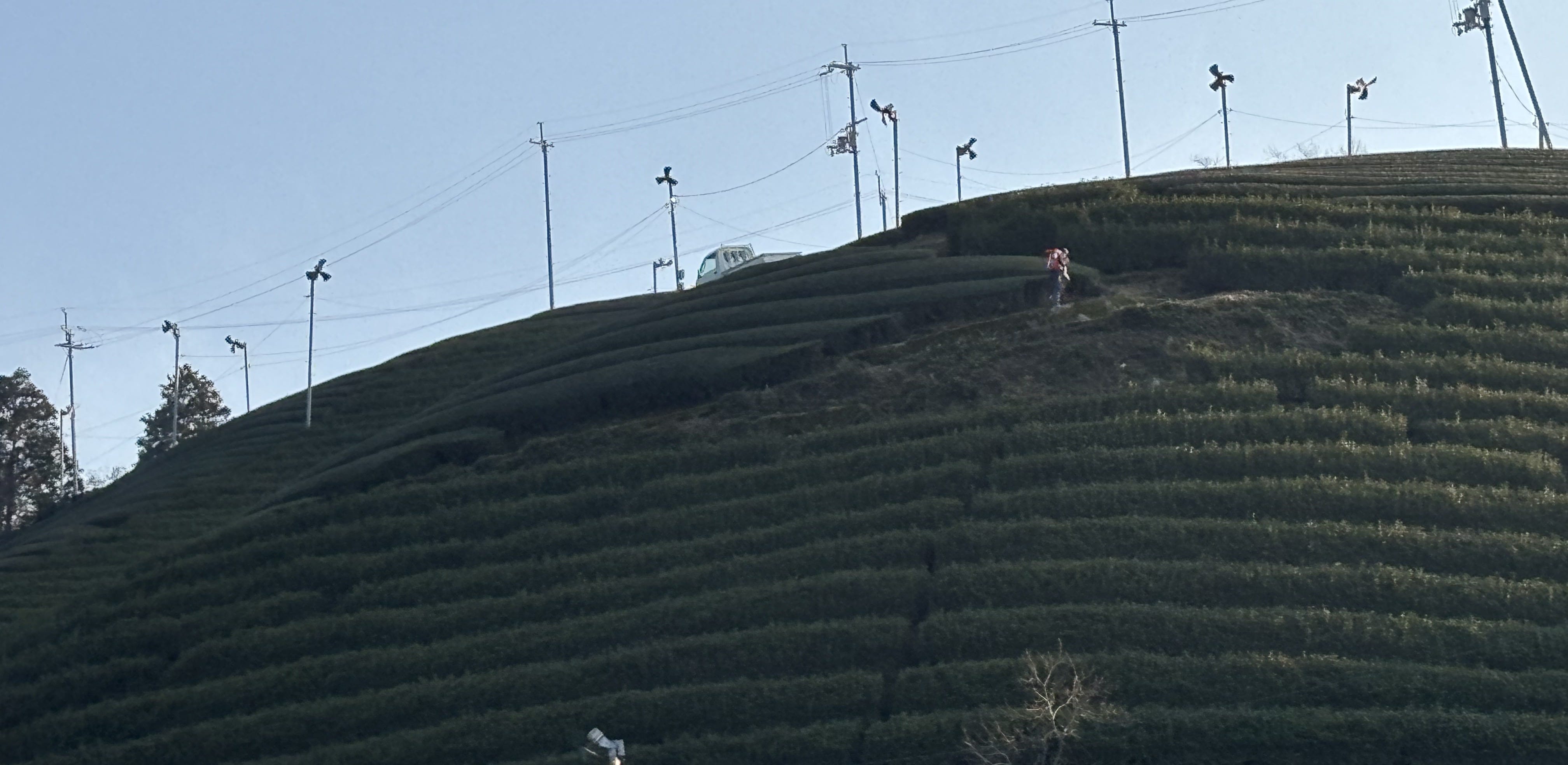
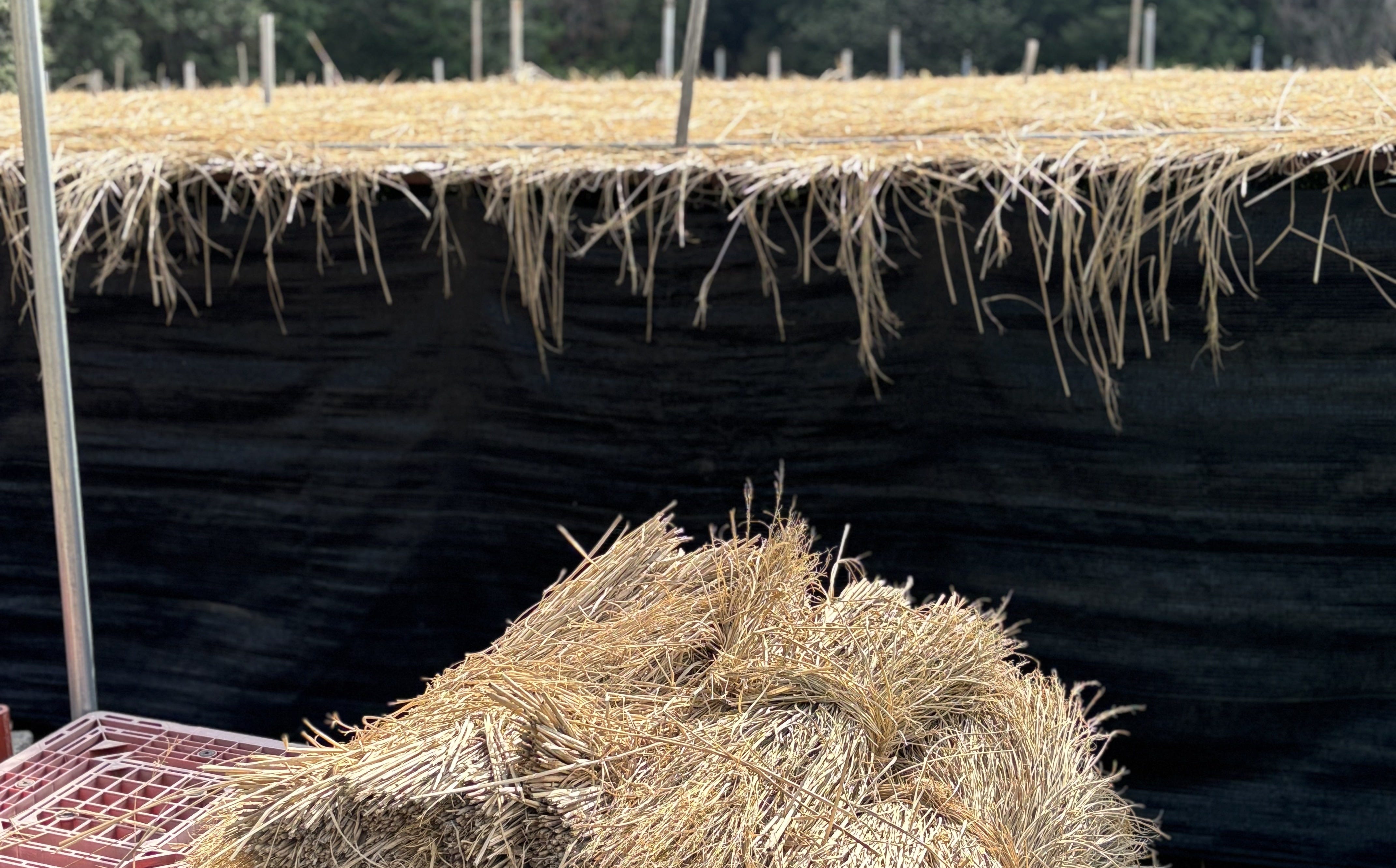
The steep slopes and wind of places like Wazuka would have made shaded cultivation extremely difficult, perhaps commercially impossible, without the invention of synthetic shade cloth (kanreisha) that spread in the twentieth century. The shading technology of Edo and Meiji-era Japan was not good enough for tencha cultivation to spread to mountainous terroir. Tana, the shelf-and-frame canopy, needs relatively flat ground, and honzu reed-and-straw covers blow off an exposed hillside too easily.
Untangling Sencha from Matcha
This is the conflation at the heart of the broader “Uji Matcha” definition defense: “Ujicha” (宇治茶) is a broad category that covers sencha, gyokuro, and matcha. The surrounding regions supplied sencha to Uji blend houses, and this is widely understood in the trade. But here’s the irony: talk to any Uji-based matcha farmer and they’ll tell you almost nobody in Uji produces sencha anymore and they never really did. According to Kyoto Prefecture’s own 2024 production survey, Uji City produced just 2.1 tons of sencha, less than 1% of the prefecture’s 248-ton sencha output. [3] Uji is a tencha town. But tencha, the raw material of matcha, had a completely separate supply chain governed by the guild monopoly.
The most striking proof comes from Ujitawara itself. Nagatani Soen, the father of sencha, spent 15 years developing his steamed-leaf process (completed in 1738) specifically because, as local histories note, he was “troubled by the restriction on the use of the canopy shading method.” [4, 5] This processing technique is often referred to as the “Uji method” which often gets conflated with matcha, but is referring to the invention of sencha processing, not matcha.
Ujitawara’s entire tea identity exists because it was banned from making tencha when shaded cultivation was a government-controlled monopoly exclusively within the boundries of Uji itself. The town that many cite as proof of the “Uji tea region’s” deep matcha roots actually proves the opposite: its famous contribution to Japanese tea was born from historical exclusion from the matcha supply chain.
Even the institutions now promoting the unified “Uji tea” narrative acknowledge this, if you read carefully. The research materials for the “Uji Tea as a Cultural Landscape” UNESCO World Heritage application state that Uji tea masters utilized processing and blending techniques to produce diverse, high-quality tea, firmly establishing the Uji tea name. [4] Processing and blending. Not terroir. Not geography. The committee building the case for World Heritage status is admitting in its own research notes that the brand was built on craft skill and blending, not on the unique properties of the land.
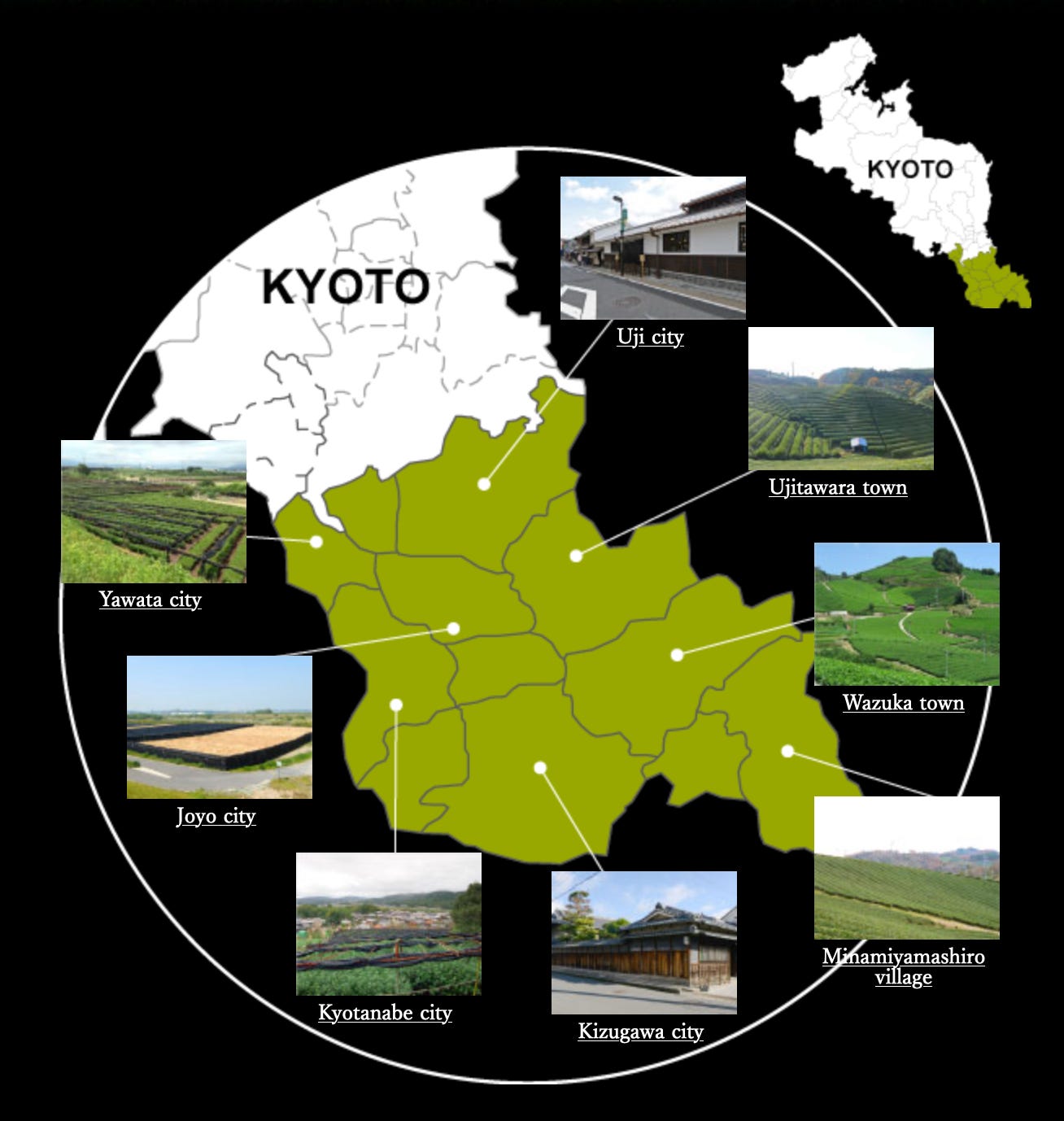
And the World Heritage bid itself tells a geographic story that contradicts the label. The proposal covers eight municipalities across the entire Yamashiro region, including Wazuka and Minamiyamashiro, areas that had nothing to do with matcha production until very recently. The bid attempts to construct a unified cultural landscape narrative around “Uji tea” as a broad category, and for sencha, the historical and geographical connections across these municipalities are defensible. But for the product that drives the brand’s global fame, matcha, that unity doesn’t hold. The matcha story doesn’t extend to most of these places until the 20th century. The UNESCO proposal, in effect, borrows the geographic breadth of sencha’s history and drapes it over a product whose supply chain was historically confined to Uji itself. [4] Not to mention, the bid draws a boundary that the Uji Matcha trademark completely ignores by allowing tea from outside the Yamashiro region in Kyoto prefecture as well as from three entirely separate prefectures: Nara, Shiga, and Mie.
The Beef Scandal and the Label
The timing of the label expansion and registered trademark in 2004 as discussed in part 1, isn’t a coincidence.
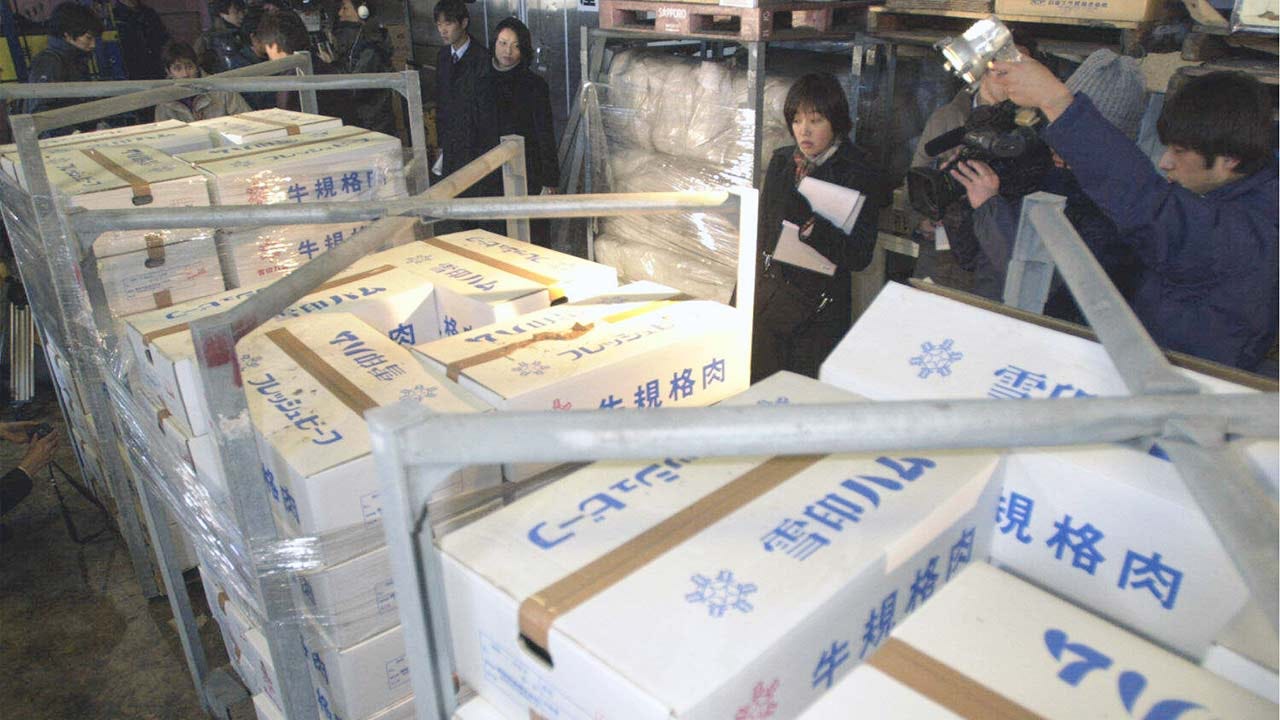
In January 2002, Snow Brand Foods was caught relabeling 30 tons of Australian beef as domestic Japanese beef. [5] Consumer trust was shaken across the food industry. Japan responded with the Food Safety Basic Law, and industries scrambled to formalize their regional labeling before someone formalized it for them.
In 2003, the tea industry introduced an experimental framework: Uji Tea must contain at least 50% Kyoto-grown tea. But no consensus was reached because there simply weren’t enough Kyoto-grown leaves to meet demand.
On March 25, 2004, the Kyoto Prefectural Tea Chamber expanded the definition at Uji City Hall. As the Kyoto Shinbun reported: [6]
“[The Chamber decided] on voluntary standards for Uji tea origin labeling on March 25, stipulating that ‘Uji tea’ must be ‘produced in Kyoto, Nara, Shiga, and Mie prefectures and processed within the prefecture.’”
The idea for a 50% Kyoto requirement vanished. The industry’s response to a crisis of honesty was to make the label broader, not more precise. These are not centuries-old tencha/matcha suppliers. They are loose leaf tea regions that pivoted when the market demanded it.
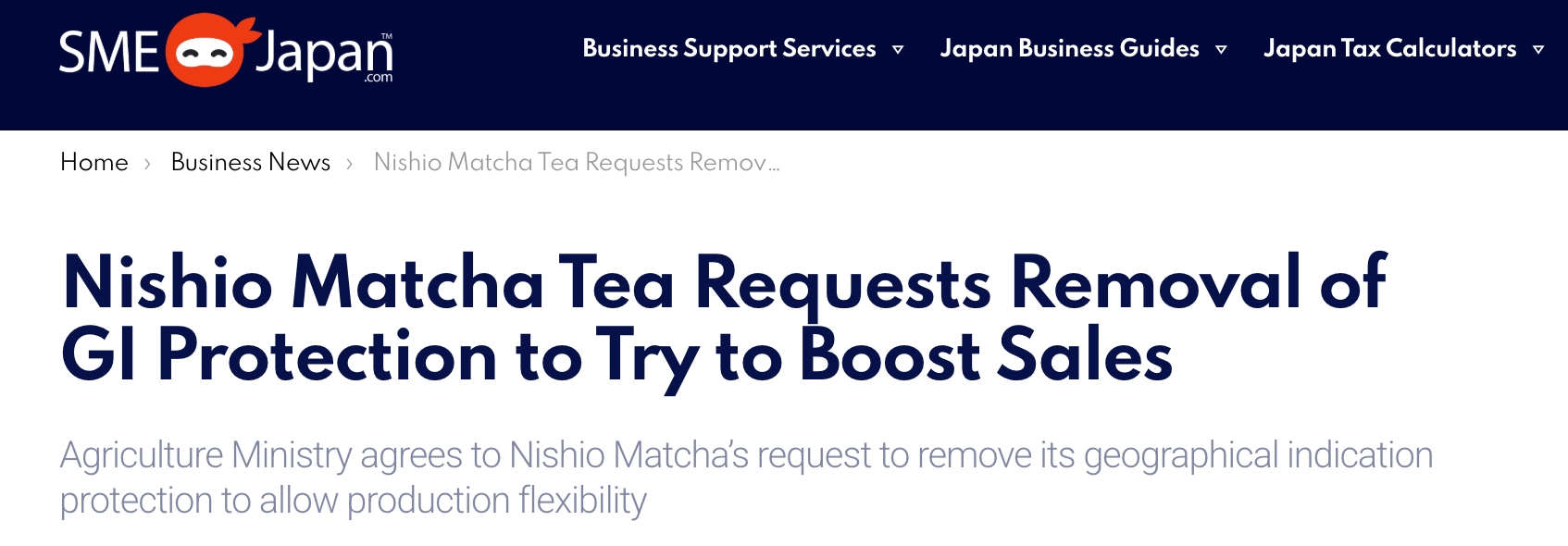
For contrast, look at Nishio. Producers in Nishio, Aichi Prefecture, secured Geographical Indication (GI) protection in March 2017, tying “Nishio Matcha” to a specific place with strict sourcing rules: only matcha from tea grown and processed entirely within Nishio City, Anjo City, and Hazu-gun Kira-cho could carry the name. But by February 2020, they voluntarily withdrew from GI, the first time any product had ever been removed from Japan’s GI protection list. [7] The restrictions priced them out, roughly three times above competitors. They chose volume over provenance. Uji chose the other path: keep the brand loose, absorb the volume. Neither choice serves the consumer particularly well.
What makes the Nishio story especially interesting is scale. Japan’s Ministry of Agriculture, Forestry and Fisheries (MAFF) describes Aichi prefecture as one of Japan’s leading tencha production areas with 70% of its aracha (unrefined bulk tea) being tencha. [8] This is not a boutique operation. And yet most consumers outside Japan have never heard of Nishio matcha. The demand cycle funnels their attention elsewhere… stay tuned for Part 4.
Sources, Part 3
Ukita Noriyoshi (1954), “A Geographical Study of the Uji Tea Industry,” Shirin Vol. 37(4), pp. 385-399. Kyoto University. hdl.handle.net/2433/249136
Kuwabara Zensuke Shoten, “History of Matcha” Part 1-2: Tencha Production by Region. zkuwabara.com/mattya1_2.html
Kyoto Prefecture, 2024 Tea Production Survey (R6). pref.kyoto.jp/nosan/documents/r6chachosa2.pdf
Uji-cha World Cultural Heritage Registration Promotion Platform, "Uji-cha Tea Cultural Landscape," Kyoto Prefecture, https://ujicha.kyoto/en/
Beef Fraud Scandal (2002) impact on matcha labeling. https://www.kyoto-teramachi.or.jp/horaido/CertificateofOrigin2013-J.html
Kyoto Shimbun, March 25, 2004. news.a902.net/a1/2004/0325-78.html
USDA GAIN Report: Japan Withdraws Product from GI Protection List, Feb. 2020. fas.usda.gov/data/japan-japan-withdraws-product-gi-protection-list
MAFF (農林水産省 農産局), 全国各地のお茶産地の紹介 [Introduction to Tea Production Areas Across Japan], August 2023, p. 4 (Aichi). https://www.maff.go.jp/j/seisan/tokusan/cha/attach/pdf/ocha-43.pdf